









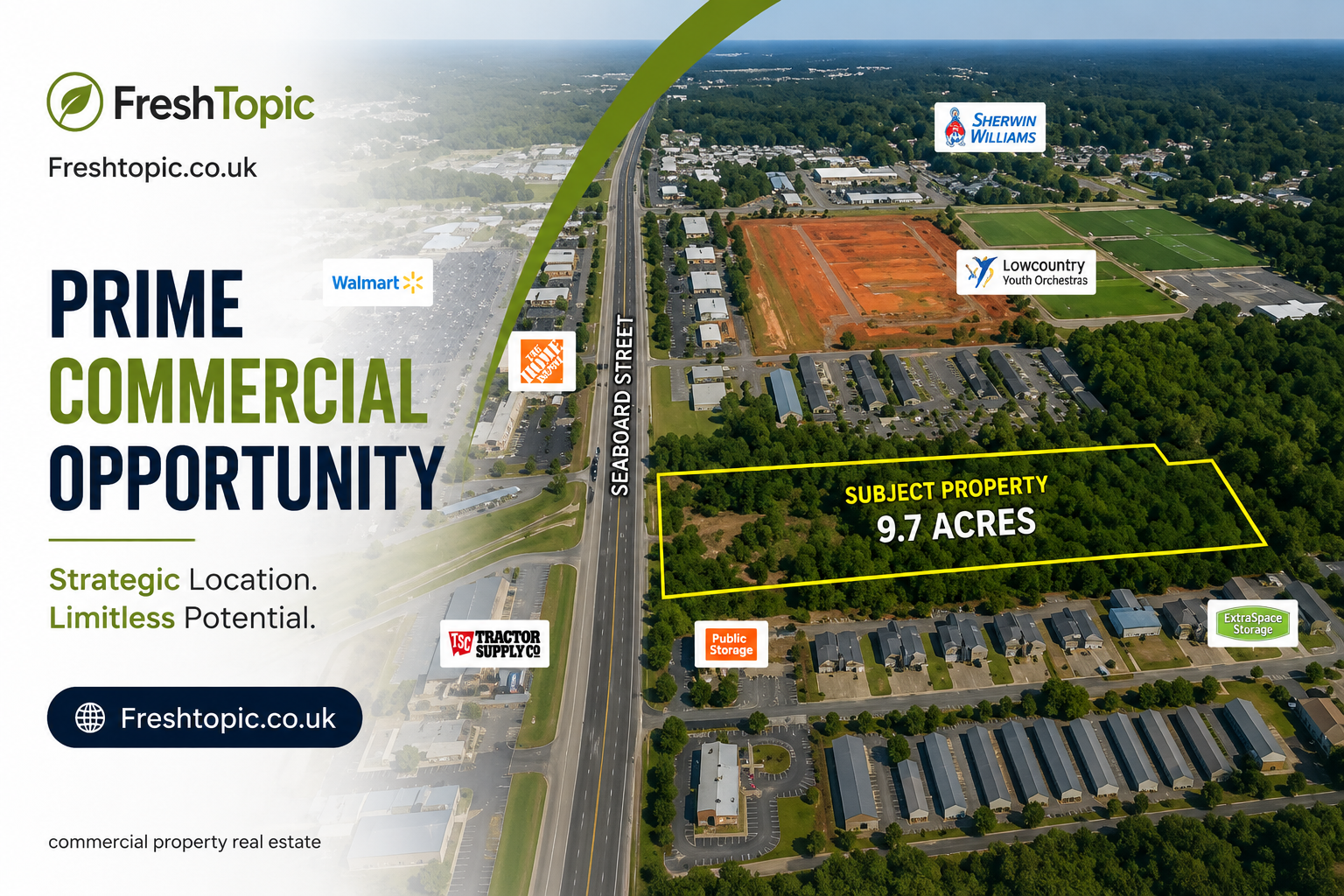
You’ve seen the listings. Office buildings. Strip malls. Warehouses with “For Lease” banners flapping in the wind. But if you’re new to this space, the jargon alone can feel like a locked door.
Here’s the problem: most guides either oversimplify commercial property real estate into a glossary of terms, or bury you in finance jargon meant for institutional investors. Neither helps you if you’re a small business owner ready to stop renting, or a first-time investor wondering whether that empty retail building downtown is a smart buy or a money pit.
The pain point is real. A single wrong move in commercial real estate — the wrong location, an underestimated repair bill, an agent who doesn’t specialize in commercial deals — can cost tens of thousands of dollars.
The promise of this guide: by the end, you’ll understand exactly what commercial property real estate is, how to evaluate a deal, what a good commercial property real estate agent should do for you, and how to avoid the mistakes that trip up most first-time buyers.
Commercial property real estate refers to land or buildings intended to generate profit — through rental income, capital appreciation, or business operations — rather than serve as a personal residence.
Main Types of Commercial Property
- Office — single-tenant buildings, multi-tenant towers, medical office space
- Retail — strip centers, standalone stores, shopping malls
- Industrial — warehouses, distribution centers, manufacturing facilities
- Multifamily — apartment buildings with five or more units (classified as commercial for lending purposes)
- Mixed-use — combined retail, office, and residential in one property
- Special purpose — hotels, self-storage, medical facilities, and land
Why This Matters
Commercial property isn’t just a bigger version of buying a house. The financing, the legal exposure, the inspection process, and the negotiation dynamics are fundamentally different.
According to the National Association of Realtors’ commercial market data, commercial transactions are far more sensitive to interest rate shifts, local zoning changes, and vacancy trends than residential deals. That means the stakes — and the potential upside — are higher. & more blogs digital .
Getting this right matters because commercial property is often the single largest financial decision a small business owner or investor makes. A well-chosen property can anchor decades of stable income. A poorly chosen one can drain cash flow for years.
How to Buy Commercial Property Real Estate (Step-by-Step)
Step 1 — Define Your Investment Goals
Before browsing listings, get specific. Are you buying to occupy the space yourself, or purely for investment income? Owner-occupied purchases often qualify for SBA 504 loans with lower down payments, while pure investment properties typically require conventional commercial financing with 25–35% down.
Step 2 — Get Pre-Qualified for Financing
Commercial lenders evaluate the property’s income potential (debt service coverage ratio), not just your personal credit. Talk to a commercial lender early — this determines your realistic price range before you fall in love with a listing you can’t finance.
Step 3 — Work With a Commercial Property Real Estate Agent
This is not optional if you’re serious. A commercial property real estate’s agent understands zoning restrictions, lease structures (NNN, gross, modified gross), and comparable sales data that residential agents typically don’t touch. Ask any candidate agent how many commercial transactions they’ve closed in the past 12 months — not just how long they’ve held a license.
Step 4 — Evaluate Commercial Property Real Estate for Sale
When reviewing commercial property real estate’s for sale, focus on:
- Cap rate (net operating income ÷ purchase price) — a quick profitability snapshot
- Location and traffic patterns — foot traffic for retail, highway access for industrial
- Tenant mix and lease terms — for multi-tenant buildings, check lease expiration dates
- Zoning compliance — confirm the property’s current use is legally permitted
Step 5 — Due Diligence and Closing
Order a Phase I Environmental Site Assessment, a property condition report, and a title search. Commercial due diligence periods typically run 30–60 days — use every day of it.
Residential Agent vs. Commercial Property Real Estate Agent
Comparison Table
| Factor | Residential Agent | Commercial Property Real Estate Agent |
|---|---|---|
| Property valuation method | Comparable sales | Income approach (cap rate, NOI) |
| Typical deal timeline | 30–45 days | 60–120 days |
| Financing complexity | Standard mortgage | SBA, bridge, portfolio loans |
| Lease knowledge required | Minimal | Extensive (NNN, CAM, gross leases) |
| Client type | Individuals/families | Businesses, investors, developers |
Common Mistakes to Avoid
- Skipping a Phase I environmental assessment to save money upfront
- Underestimating operating expenses like CAM fees, property taxes, and insurance
- Hiring a generalist agent instead of a commercial property real estate agent
- Ignoring zoning restrictions before signing a purchase agreement
- Overlooking lease assignability clauses that could restrict your future flexibility
Finding a Commercial Property Real Estate Agent in Alabama
Alabama’s commercial market — particularly in Birmingham, Huntsville, and Mobile — has seen steady industrial and mixed-use growth tied to logistics and manufacturing expansion. If you’re searching for a commercial property real estate agent in Alabama, prioritize agents who hold the CCIM (Certified Commercial Investment Member) designation and who can show recent closed transactions in your specific submarket, not just statewide activity.
Ask local agents directly about industrial vacancy rates and incentive programs, since these shift by county and can meaningfully affect your total cost of ownership.
Expert Recommendations
- Always request trailing 12-month financials on income-producing properties before making an offer
- Negotiate a due diligence contingency that lets you walk away without losing your earnest money
- Work with a commercial real estate attorney in addition to your agent — lease and purchase agreements carry more legal complexity than residential contracts
- Get a third-party appraisal even if the lender doesn’t strictly require one at your loan amount
Pros and Cons of Investing in Commercial Property
Pros
- Longer lease terms mean more predictable income
- Tenants often cover maintenance and taxes (NNN leases)
- Higher income potential than residential rentals
- Appreciation tied to business performance, not just neighborhood trends
Cons
- Higher down payment requirements (typically 25%+)
- Longer vacancy periods between tenants
- More complex financing and legal due diligence
- Greater sensitivity to economic downturns
Conclusion
Commercial property real estate rewards preparation and punishes shortcuts. Whether you’re buying your first office building or comparing commercial property real estate for sale across multiple markets, the difference between a smart investment and a costly mistake usually comes down to due diligence and who you choose to work with.
If you’re ready to move forward, start by connecting with a licensed commercial property real estate agent in your target market — ideally one who can show you recent closed deals, not just active listings.
FAQs
What is considered commercial property real estate?
Commercial property real estate includes any land or building used for business purposes — office, retail, industrial, multifamily (5+ units), and special-purpose properties like hotels or self-storage.
How do I find commercial property real estate for sale near me?
Search commercial listing platforms like LoopNet or CoStar, and work with a licensed commercial property real estate agent who has access to off-market inventory.
Do I need a different agent for commercial vs. residential property?
Yes. A commercial property real estate agent specializes in income analysis, zoning, and lease structures that most residential agents don’t regularly handle.
How much down payment is needed for commercial property?
Most lenders require 20–35% down, depending on property type, borrower experience, and whether the property is owner-occupied.
What’s a good cap rate for commercial property?
Cap rates vary by market and asset class, but 6–10% is generally considered a healthy range for stabilized properties in secondary markets.
How do I choose a commercial property real estate agent in Alabama?
Look for CCIM certification, recent closed deals in your target submarket, and direct experience with your property type (retail, industrial, office, etc.).
In Short
- Commercial property real estate spans office, retail, industrial, multifamily, and special-purpose assets
- Financing, valuation, and due diligence differ significantly from residential real estate
- A specialized commercial property real estate agent is essential, not optional
- Cap rate, lease terms, and zoning compliance are the three factors to check first
- Alabama buyers should prioritize agents with CCIM designation and local submarket data