









Typing “white temple” into Google can send you three completely different directions — and landing on the wrong page wastes your time. Maybe you’re planning a trip to northern Thailand and want to know if the shimmering, mirror-covered temple in every travel photo is worth the detour. Maybe you’re studying art history and need to understand a 5,000-year-old ziggurat in ancient Mesopotamia. Or maybe you searched “Scott and White Temple” because you’re looking for a hospital in Central Texas, not a religious site at all.
This guide sorts all of it out. We’ll cover the famous White Temple in Chiang Rai, Thailand in full detail — history, symbolism, and a practical visiting guide — and then clearly separate it from the two other things people sometimes confuse it with, so you leave with the exact answer you came for.
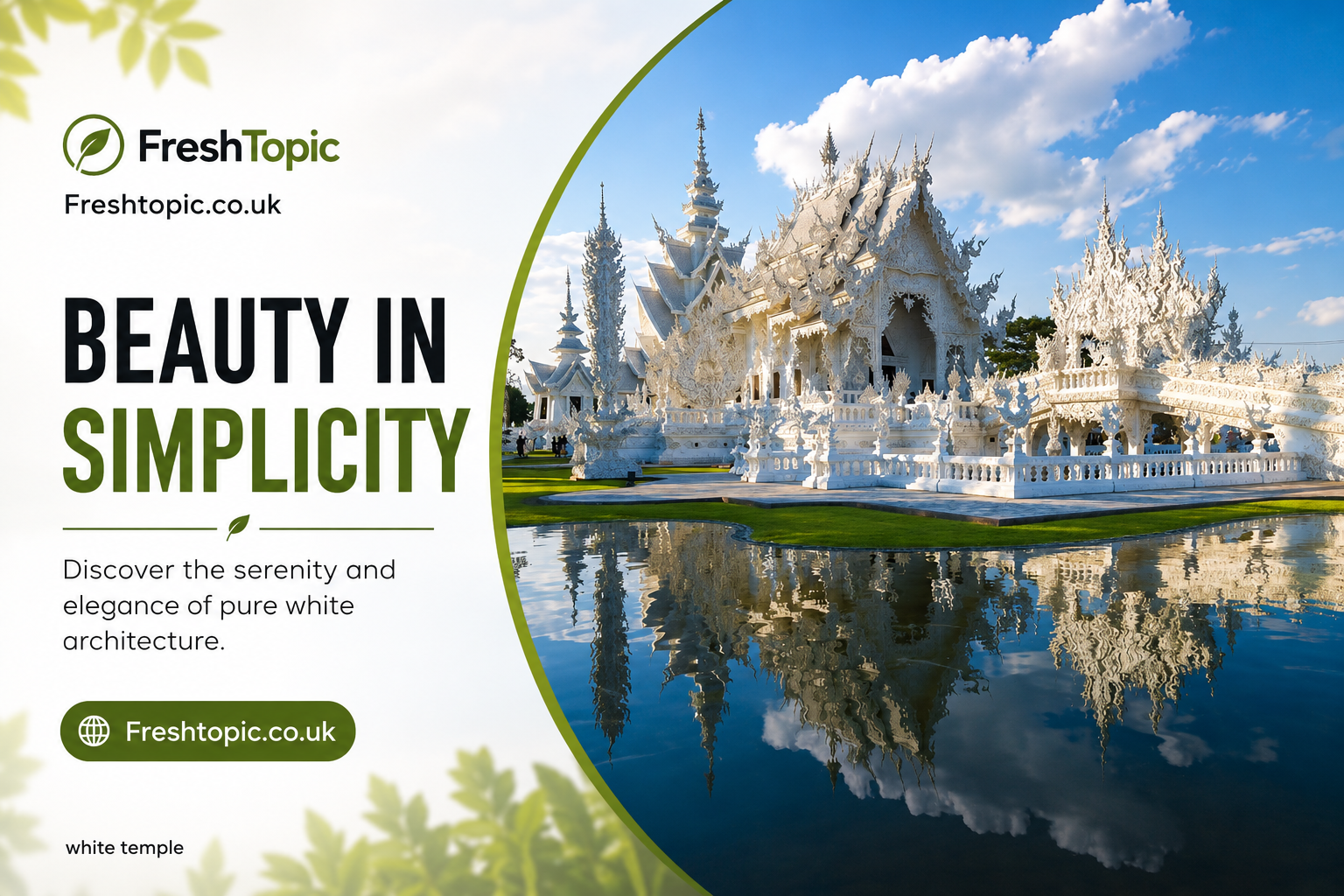
(Suggested featured image: The White Temple, Wat Rong Khun, with its mirrored spires reflecting sunlight. “White Temple Chiang Rai Wat Rong Khun exterior”)
Quick Answer: Which “White Temple” Are You Looking For?
Featured snippet target answer: “White Temple’s” most commonly refers to Wat Rong Khun, a contemporary Buddhist temple in Chiang Rai, Thailand, known for its all-white, mirror-covered exterior. The term can also refer to the ancient White Temple of Uruk, a 5,000-year-old Mesopotamian temple built atop a ziggurat in modern-day Iraq, or to Baylor Scott & White Medical Center – Temple, an unrelated hospital in Temple, Texas.& more blogs neural .
| If you searched… | You probably want… |
|---|---|
| “White Temple” or “White Temple Chiang Rai” | Wat Rong Khun, the Buddhist temple in Thailand |
| “White Temple and its ziggurat” | The ancient White Temple of Uruk, Mesopotamia (modern Iraq) |
| “Scott and White Temple” | Baylor Scott & White Medical Center – Temple, a hospital in Temple, Texas |
Why This Matters
Getting the right “White Temple’s” matter more than it might seem. Travelers who confuse Wat Rong Khun with an archaeological ruin in Iraq will plan the wrong trip entirely. Students researching ancient Mesopotamian architecture need accurate historical facts, not a modern Thai temple’s opening hours. And someone searching for hospital information in Temple, Texas needs contact details for a medical center — not a travel guide.
Clear, accurate disambiguation saves time, prevents misinformation, and — for anyone researching these topics academically or professionally — protects credibility. That’s exactly what this guide is built to do.
White Temple Chiang Rai (Wat Rong Khun): Full History
The White Temple’s, known locally as Wat Rong Khun, sits roughly 13 kilometers south of Chiang Rai city in northern Thailand. What visitors see today is a dramatic transformation of a site with much humbler beginnings.
From Ruined Village Shrine to World-Famous Landmark
A small community shrine originally stood on this site in the late 19th century, built in the traditional Lanna style common to northern Thailand. By the mid-20th century, the structure had fallen into serious disrepair — the roof leaked, termites had damaged the murals, and the original Buddha image was broken. Villagers largely abandoned it in favor of newer temples closer to town.
In 1997, Chiang Rai-born artist Chalermchai Kositpipat returned to his childhood temple and found it in ruins. He offered to rebuild it entirely at his own expense, using his personal art career earnings — a project that has since cost him tens of millions of dollars.
The Artist Behind the White Temple
Kositpipat trained at Bangkok’s Poh Chang Art School before building an international reputation as a painter. He rebuilt Wat Rong Khun on his own artistic terms, blending traditional Buddhist temple architecture with strikingly modern imagery. The temple deliberately receives no government funding, which preserves Kositpipat’s complete creative control — a decision that has made the temple both beloved and, to some traditionalists, controversial.
The all-white exterior, covered in mirrored glass fragments, was chosen specifically to represent the purity of the Buddha and to reflect his teachings outward. In May 2014, an earthquake damaged parts of the complex; engineers confirmed the structures remained sound, and Kositpipat restored the damage rather than closing the site. The project is famously unfinished — some estimates suggest the full complex won’t be complete until 2070.
Detail shot of the mirrored mosaic tiles on the temple exterior. Alt text: “White Temple’s Chiang Rai mirrored mosaic detail”)
Visiting the White Temple: Practical Guide
Hours, Tickets & Getting There
The White Temple’s opens daily, generally from around 6:30 a.m. to 6:00 p.m., with an entrance fee of roughly 100 Thai baht for foreign visitors. It’s located about a 15-minute drive south of central Chiang Rai, making it an easy half-day trip whether you’re staying in the city or arriving as a day-trip from Chiang Mai.
What to See on the Grounds
The temple complex spans more than eight hectares and includes several distinct areas:
- The Sukavadee Bridge — visitors cross this bridge, symbolically leaving behind the “cycle of rebirth,” passing rows of outstretched hands representing desire and suffering
- The main ubosot (ordination hall) — the centerpiece structure, covered in white plaster and mirrored glass
- The Golden Building — a striking gold-colored structure housing restrooms, deliberately contrasting the white main hall to represent the pursuit of material wealth
- The Reliquary and Ceremonial Hall
- An on-site art gallery displaying Kositpipat’s other paintings
Common Mistakes Visitors Make
- Visiting midday in peak heat — early morning offers better light for photos and smaller crowds
- Skipping the interior murals — many visitors photograph the exterior and leave, missing the temple’s most talked-about feature
- Wearing inappropriate clothing — as an active religious and cultural site, shoulders and knees should be covered
- Rushing the visit — allow at least 60–90 minutes to see the full grounds properly
The Symbolism and Art Inside the White Temple
The temple’s interior murals are where Wat Rong Khun becomes genuinely unlike any other Buddhist temple in the world. Rather than sticking to traditional religious scenes, the murals blend Buddhist imagery with pop culture and modern history — depictions have included figures like Batman, Spider-Man, Pikachu, and even the September 11 attacks. These images are intended to symbolize the chaos, temptation, and violence of the modern world, framed as obstacles on the path to enlightenment.
Pros and Cons of Visiting
| Pros | Cons |
|---|---|
| Genuinely one-of-a-kind architecture and art | Can be extremely crowded during peak tourist season |
| Rich symbolism rewards a slower, thoughtful visit | Not an active temple — no resident monks |
| Affordable entry fee | Some traditionalists find the pop-culture imagery jarring |
| Easy day trip from Chiang Rai or Chiang Mai | Limited shade; hot midday visits can be uncomfortable |
Interior mural blending Buddhist and pop-culture imagery. Alt text: “White Temple’s Wat Rong Khun interior mural artwork”)
White Temple and Its Ziggurat (Ancient Uruk, Mesopotamia)
Separately from Thailand, “White Temple’s” is also the name historians use for one of the oldest known monumental religious structures on Earth: a temple built atop the Anu Ziggurat in the ancient Sumerian city of Uruk, in what is now Warka, Iraq.
This White Temple’s dates to roughly 3200–3000 BCE, during the Late Uruk Period, and was dedicated to Anu, the Sumerian sky god. The structure rose approximately 40 feet (12 meters) above the flat Mesopotamian plain, making it visible even beyond the city’s defensive walls — an intentional display of religious and political power, since rulers were believed to be chosen by Anu himself.
The temple itself measured about 17.5 by 22.3 meters, built with a tripartite plan — a long central hall flanked by smaller rooms — and oriented so its corners aligned with the cardinal directions. Its name comes from the fact that it was whitewashed inside and out, which would have made it strikingly bright under the Mesopotamian sun. Archaeologists excavating the site found gypsum tablets bearing early cylinder-seal impressions related to temple accounting, along with a ritual foundation deposit containing the bones of a leopard and a lion.
Comparison Table: Chiang Rai’s White Temple vs. the Ancient Uruk White Temple
| Feature | White Temple, Chiang Rai | White Temple, Uruk |
|---|---|---|
| Location | Chiang Rai, Thailand | Warka (ancient Uruk), Iraq |
| Built | Began 1997 (rebuilt on 19th-century site) | c. 3200–3000 BCE |
| Religion | Buddhism | Ancient Sumerian polytheism (dedicated to Anu) |
| Purpose | Active art installation / cultural landmark | Religious worship site atop a ziggurat |
| Status today | Open to visitors, still being expanded | Archaeological ruin |
Scott & White Temple: A Different Institution Entirely
If your search was actually “Scott and White Temple’s,” you’re likely looking for Baylor Scott & White Medical Center – Temple, a large teaching hospital in Temple, Texas — completely unrelated to any religious site.
The hospital traces back to 1897, when Dr. Arthur C. Scott and Dr. Raleigh R. White Jr. opened the Temple Sanitarium. It has since grown into a 636-bed multi-specialty teaching hospital, serving as the primary clinical teaching campus for the Texas A&M Health Science Center College of Medicine. The facility operates a Level I adult trauma center and a Level II pediatric trauma center, and U.S. News & World Report ranks it among the top regional hospitals in Texas, with high-performing recognition in cardiology and heart and vascular surgery.
If this is what you were searching for, you’ll want the hospital’s own site (bswhealth.com) rather than any travel or history resource — including this one.
Expert Recommendations
- For travelers: Visit the White Temple’s in Chiang Rai first thing in the morning, both for softer light and to beat tour bus crowds that typically arrive by mid-morning.
- For students and researchers: When citing “White Temple’s” in academic work, always specify Uruk or Chiang Rai in the first reference — the term alone is genuinely ambiguous in search and citation contexts.
- For photographers: The temple’s mirrored surfaces reflect differently depending on cloud cover; an overcast morning can actually produce more even, glare-free photos than direct sun.
- For content creators and marketers: If you’re building content around “White Temple’s” keywords, disambiguate early in the piece — search engines and AI answer engines increasingly reward pages that resolve ambiguous queries clearly, rather than assuming one intent.
Conclusion
“White Temple” turns out to be three very different answers wearing the same name — a modern Buddhist masterpiece in northern Thailand, a 5,000-year-old Sumerian ruin in Iraq, and a major hospital in Central Texas. Getting the right one matters, whether you’re booking a flight to Chiang Rai, writing an art history paper, or trying to reach a medical center.
For most people who land on this guide, the destination is Wat Rong Khun — and it earns its reputation. Few landmarks anywhere blend traditional religious architecture with bold, contemporary artistic vision quite like it does, and a visit rewards anyone willing to slow down and actually look at the details rather than just snap a photo and move on.
FAQs
What is the White Temple in Chiang Rai called in Thai?
It’s officially known as Wat Rong Khun. “White Temple” is the popular English nickname used by international visitors, referring to its all-white, mirror-covered design.
Is the White Temple a real functioning Buddhist temple?
It functions primarily as an art installation and cultural landmark rather than an active place of worship — it currently has no monks residing on-site, though it retains religious significance and symbolism.
How much does it cost to visit the White Temple?
Entry costs roughly 100 Thai baht for foreign visitors, making it one of the more affordable major attractions in the Chiang Rai region.
What does “White Temple and its ziggurat” refer to?
It refers to the ancient White Temple built atop the Anu Ziggurat in Uruk, Mesopotamia (modern-day Iraq), dating to approximately 3200–3000 BCE and dedicated to the sky god Anu.
Is Scott and White Temple a hospital or a temple?
It’s a hospital — Baylor Scott & White Medical Center – Temple, located in Temple, Texas. It has no connection to either the Thai or ancient Mesopotamian White Temples.
How long does it take to visit the White Temple in Chiang Rai?
Most visitors spend 60 to 90 minutes exploring the grounds, though photography enthusiasts and those wanting to view the interior murals closely often stay longer.
In Short
- The White Temple in Chiang Rai (Wat Rong Khun) is a contemporary Buddhist temple rebuilt starting in 1997 by artist Chalermchai Kositpipat, famous for its mirror-covered white exterior and pop-culture-infused murals.
- The White Temple and its ziggurat refers to a separate, ancient structure in Uruk, Mesopotamia, dating to roughly 3200–3000 BCE and dedicated to the sky god Anu.
- Scott & White Temple is unrelated to either — it’s Baylor Scott & White Medical Center – Temple, a major teaching hospital in Temple, Texas, founded in 1897.
- Confirming which “White Temple” you mean before searching further saves significant time, especially for travel planning or academic research.
- Chiang Rai’s White Temple remains an active, evolving art project, with estimates suggesting full completion won’t happen until 2070.