









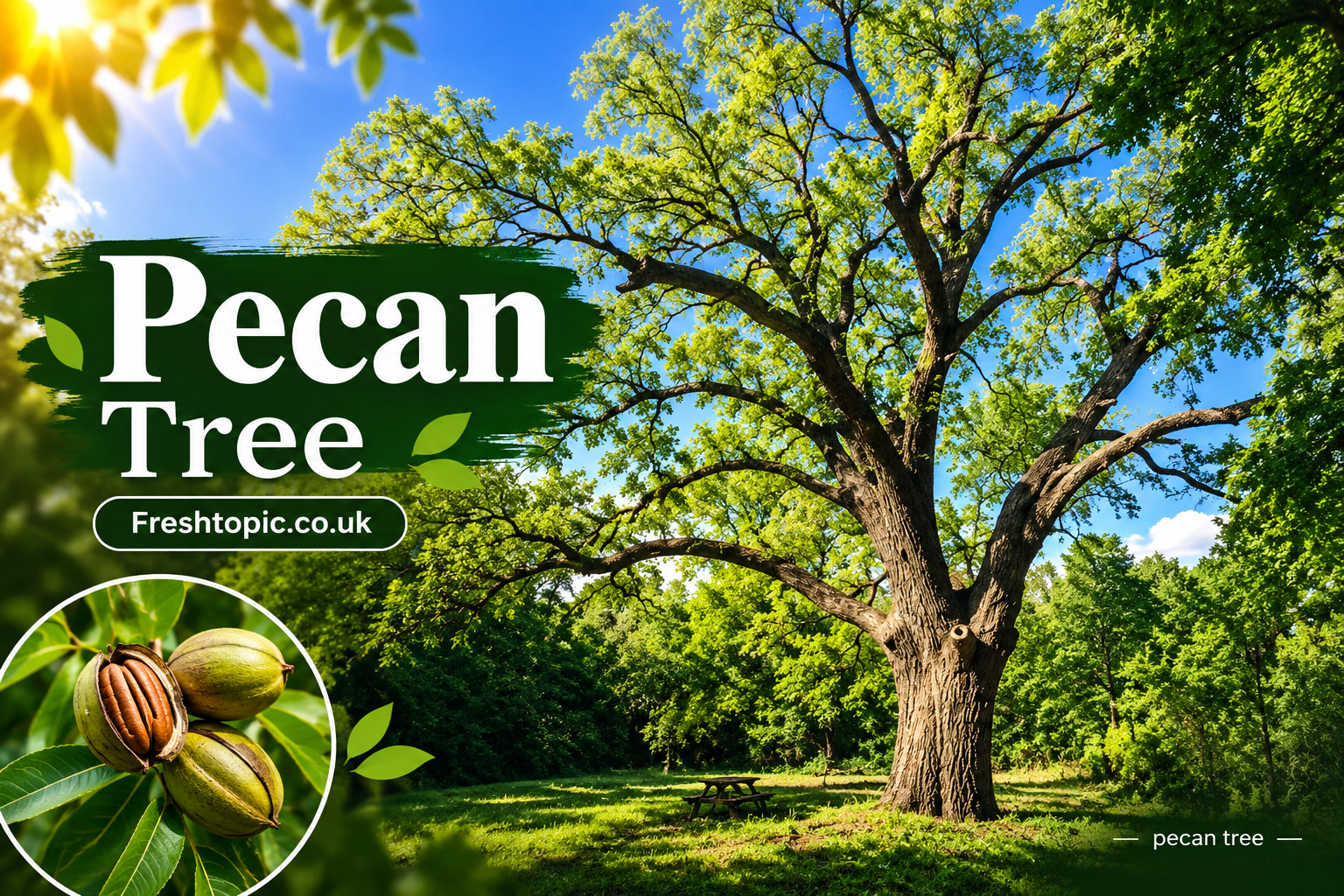
You’re standing under a massive shade tree, staring up at long, feathery leaves scattered across the ground — and you’re almost certain it’s a pecan tree. Almost.
The problem is that pecan trees look nearly identical to several other species, especially other members of the hickory family and even black walnut trees. Misidentify one, and you could end up waiting years for nuts that never come — or worse, mistaking a toxic look-alike for something edible.
This guide clears up the confusion for good. You’ll learn exactly how to identify a pecan tree by its leaf, bark, and nut characteristics, get a breakdown of the popular Pawnee pecan variety, and pick up the same identification tricks arborists and home growers use in the field. By the end, you’ll be able to spot a pecan tree correctly — every time.
What Is a Pecan Tree?
The pecan tree (Carya illinoinensis) is a large deciduous tree native to the southern United States and northern Mexico, prized for producing the pecan — one of the most widely eaten nuts in North America. It belongs to the hickory family, which explains why it’s so often confused with other hickories and walnuts.
Pecan trees are long-lived and slow to mature, often taking several years before producing a meaningful nut harvest, but a healthy tree can live and bear fruit for well over a century. Because of their size and longevity, correctly identifying a pecan tree — whether you’re buying land, planning an orchard, or just curious about the tree in your backyard — matters more than most people expect. & more blogs neural .
Pecan Tree Leaf Identification (Step-by-Step)
Leaf Shape and Arrangement
The single most reliable way to identify a pecan tree is by its compound leaf structure. Each pecan tree leaf isn’t one solid leaf — it’s made up of 9 to 17 individual leaflets arranged in pairs along a central stem, usually ending in one leaflet at the tip.
- Look for a long central leaf stalk (10 to 20 inches).
- Count the smaller leaflets branching off it — an odd number is typical.
- Check that each leaflet is slightly curved and tapers to a point, giving the whole leaf a feathery, almost fern-like look.
Leaf Size and Color
Pecan tree leaves are typically bright to medium green in spring and summer, turning yellow-brown in fall before dropping. Individual leaflets range from 4 to 8 inches long, with finely serrated (toothed) edges.
Pecan Tree Leaf vs. Similar Trees
This is where most misidentifications happen. Pecan leaves are frequently confused with:
- Black walnut leaves — nearly identical in shape, but walnut leaflets are typically more rounded and the tree has a distinct, pungent odor when leaves are crushed.
- Shagbark hickory leaves — usually have fewer leaflets (5–7) that are noticeably larger and broader than pecan leaflets.
- Bitternut hickory leaves — similar leaflet count, but bitternut leaflets are narrower and the buds are bright yellow, unlike pecan’s brownish buds.
Expert Tip: If you’re still unsure, crush a leaflet and smell it. Pecan and hickory leaves release a mild, slightly resinous scent, while black walnut has a much sharper, more distinctive smell.
Other Ways to Identify a Pecan Tree
Bark
Mature pecan tree bark is gray-brown and deeply furrowed into rough, scaly ridges — often described as looking like alligator skin on older trees. Younger trees have smoother, lighter gray bark.
Nuts and Husks
Pecan nuts grow inside a smooth, thin, green husk that splits open into four sections when ripe, revealing an oval, tan-brown, ridged shell. This husk-splitting pattern is one of the clearest identifiers once nuts appear in fall.
Overall Tree Shape and Size
Mature pecan trees are large and broad-canopied, commonly reaching 70 to 100 feet tall with an equally wide spread under ideal conditions. Young trees have a more upright, oval shape that broadens significantly with age.
The Pawnee Pecan Tree: A Popular Variety Explained
Among the dozens of cultivated pecan varieties, the Pawnee pecan tree is one of the most planted by home growers and small orchards — largely because it produces earlier than almost any other variety.
Pawnee Pecan Tree Characteristics
- Origin: A cross between the ‘Mohawk’ and ‘Starking Hardy Giant’ varieties, developed in Brownwood, Texas, in 1963.
- Harvest timing: Ripens roughly two to three weeks earlier than most pecan varieties, often in early to mid-fall.
- Nut quality: Produces large, thin-shelled nuts with a high kernel percentage (roughly 54–58%), making them easy to crack.
- Pollination type: A Type 1 (protandrous) pollinator, meaning it needs a Type 2 variety nearby — such as Kanza, Elliot, Stuart, or Desirable — to produce a full nut set.
- Disease resistance: Strong resistance to yellow aphids, with moderate resistance to pecan scab.
- Size: More compact than many traditional pecan varieties, making it a practical choice for home landscapes with limited space.
Comparison Table: Pawnee vs. Other Popular Pecan Varieties
| Variety | Harvest Timing | Nut Size | Pollinator Type | Best For |
|---|---|---|---|---|
| Pawnee | Early (Sept–Oct) | Large | Type 1 | Home growers, smaller spaces |
| Stuart | Mid-to-late season | Large | Type 2 | Traditional Southern orchards |
| Elliot | Mid-season | Small–medium | Type 2 | Disease resistance |
| Desirable | Mid-season | Large | Type 2 | Commercial orchards |
Pros and Cons of Growing Pecan Trees at Home
| Pros | Cons |
|---|---|
| Long lifespan and long-term nut production | Takes several years before first harvest |
| Provides substantial shade once mature | Requires significant space to reach full size |
| High market and nutritional value of nuts | Susceptible to pests like aphids and scab |
| Many varieties (like Pawnee) suited to home yards | Needs a compatible pollinator variety nearby |
Common Pecan Tree Identification Mistakes to Avoid
- Assuming any compound leaf tree is a pecan — several hickories and walnuts share a similar leaf structure.
- Judging by leaf count alone — leaflet number can overlap between species; always check leaflet shape and size together.
- Ignoring the bark — bark texture is one of the most reliable secondary identifiers, especially in winter when leaves aren’t present.
- Confusing wild native pecans with named cultivars like Pawnee — wild pecans tend to produce smaller, less consistent nuts.
A Quick Note on “Pecan Tree Cafe”
If you’ve searched for “pecan tree cafe” expecting botanical information, you’re likely looking for a specific local restaurant or coffee shop rather than the tree itself — several U.S. towns have cafes and bakeries that use this name, often inspired by pecan farming in their region. Since details like hours, menus, and locations vary widely and change often, it’s best to search your specific city name alongside “pecan tree cafe” or check a maps app directly for the most accurate, up-to-date listing.
Why This Matters
Correctly identifying a pecan tree isn’t just a fun backyard exercise — it has real practical value. Misidentifying a tree can lead to wasted years waiting for a harvest that will never come, incorrect pruning or care routines, or even health risks if a toxic look-alike is mistaken for an edible variety. Whether you’re evaluating a property purchase, planning an orchard, or simply want to know what’s growing in your yard, accurate identification saves time, money, and guesswork.
Expert Recommendations
- Identify in multiple seasons if possible. Leaves, bark, and nuts each offer clues, and cross-referencing more than one increases accuracy.
- Take a leaf sample to your local extension office if you’re still unsure — most states have agricultural extension services that offer free tree identification help.
- If planting for nut production, choose a named cultivar like Pawnee rather than relying on a wild seedling, since cultivars offer more predictable size, timing, and quality.
- Plan for a pollinator partner before planting — a single Pawnee tree alone will produce a much smaller nut set than one paired with a compatible Type 2 variety.
Conclusion
Identifying a pecan tree comes down to a few reliable clues: the compound, multi-leaflet leaf structure, the deeply furrowed bark, and the distinctive husk-splitting nut pattern in fall. Add in an understanding of popular cultivars like the early-harvesting Pawnee variety, and you’re well equipped to identify — and even grow — a pecan tree with confidence.
If you’re planning to plant one of your own, start with your local extension office or a reputable nursery to choose the right variety and pollinator pairing for your space.
FAQs
How do you identify a pecan tree leaf?
A pecan tree leaf is compound, made up of 9 to 17 curved, pointed leaflets arranged along a central stalk, with finely serrated edges and a feathery overall appearance.
What is the difference between a pecan tree and a hickory tree?
Pecan trees are a type of hickory, but they typically have more leaflets per leaf (9–17) compared to other hickories like shagbark (5–7), and produce a smooth, husk-covered nut rather than a rounder hickory nut.
What does a Pawnee pecan tree produce?
The Pawnee pecan tree produces large, thin-shelled nuts with a high kernel percentage, ripening about two to three weeks earlier than most other pecan varieties.
How can you tell a pecan tree from a black walnut tree?
Pecan leaflets are narrower and more uniformly curved, while black walnut leaflets are rounder and release a much stronger, more pungent smell when crushed.
How tall does a pecan tree get?
Mature pecan trees typically reach 70 to 100 feet tall with a wide-spreading canopy, though named varieties bred for home landscapes, like Pawnee, tend to stay somewhat smaller.
Does a pecan tree need another tree to produce nuts?
Yes. Most pecan varieties, including Pawnee, need a different, compatible pecan variety nearby for proper cross-pollination and a full nut harvest.
In Short
- Pecan tree leaves are compound, with 9–17 leaflets arranged along a central stalk.
- Bark, nut husks, and overall tree shape are useful secondary identification clues.
- The Pawnee pecan variety is prized for its early harvest and large, high-kernel nuts.
- Pawnee is a Type 1 pollinator and needs a Type 2 variety nearby to produce a full crop.
- “Pecan tree cafe” searches are usually looking for a local business, not the tree itself.