











You’ve heard its warm, resonant tone in a period film or a classical recording, and now you’re stuck with a question that’s oddly hard to answer online: what is a lute instrument, exactly?
Most guides either drown you in medieval history or skip straight to “buy now” links without explaining what you’re actually buying. That gap is frustrating if you’re trying to learn, teach, or shop with confidence — especially with regional variants like the Indian lute instrument adding another layer of confusion.
Here’s the good news: by the end of this guide, you’ll know exactly what a lute instrument is, how it differs from a guitar or oud, which Indian lutes are worth exploring, and how to pick a genuine lute instrument for sale without overpaying or under-buying. Let’s dig in.
What Is a Lute Instrument?
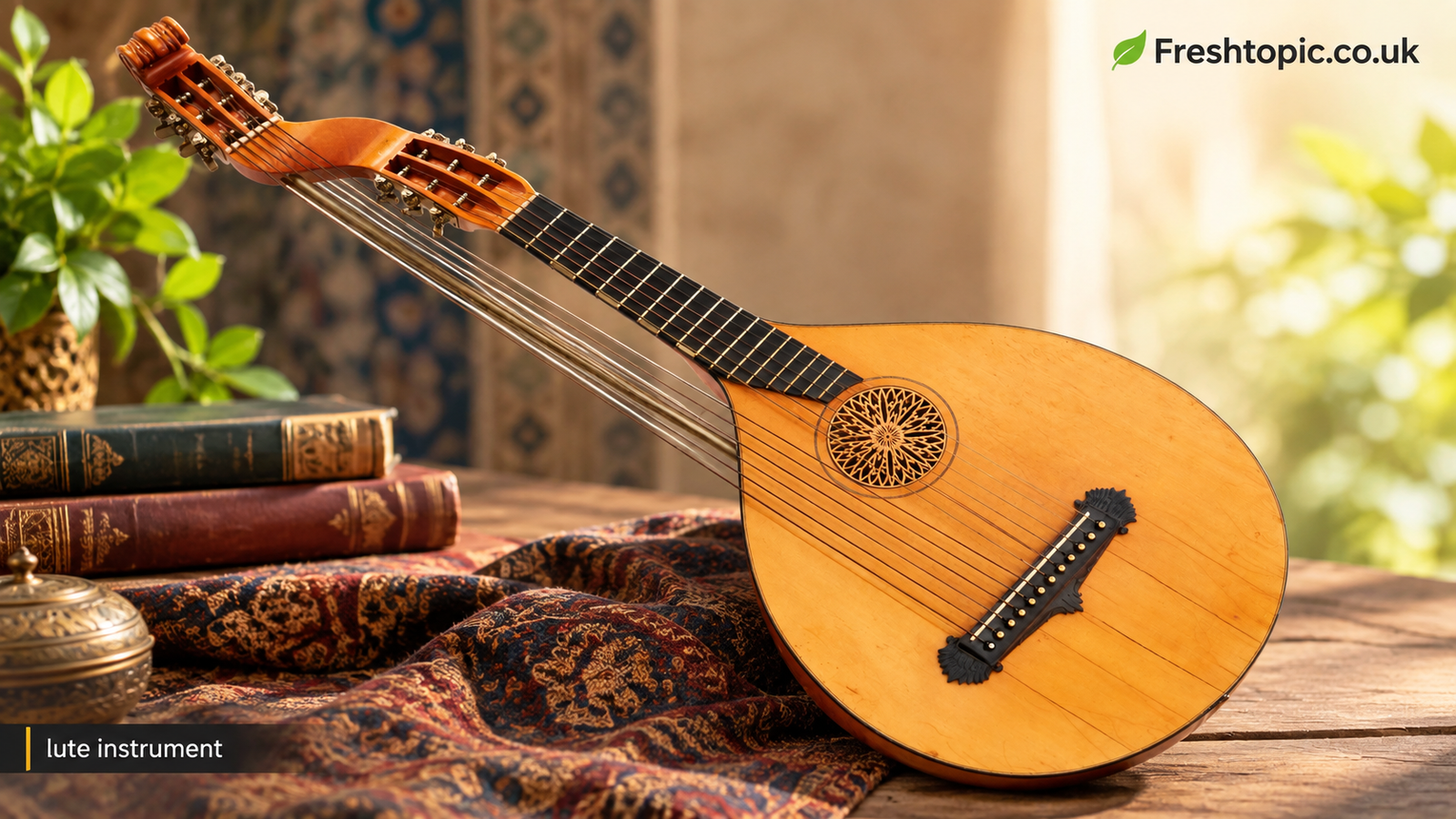
A lute instrument is any plucked string instrument with a neck and a deep, rounded back that encloses a hollow resonating cavity, usually finished with a decorative sound hole. It may be either fretted or unfretted, and its strings run parallel to the soundboard rather than at an angle.
Musicologist Curt Sachs offered the classic technical definition: a lute is “composed of a body, and of a neck which serves both as a handle and as a means of stretching the strings beyond the body.” That single sentence is why the word “lute” covers a surprisingly wide family — the lute family includes short-necked plucked lutes such as the lute, oud, pipa, and guitar, and long-necked plucked lutes such as the banjo, tanbura, bağlama, bouzouki, veena, sitar, and setar. & more blpogs neural .
A lute instrument is a plucked, stringed musical instrument with a rounded, hollow body and a fretted or fretless neck, historically strung with paired courses of strings and played by plucking with the fingers or a plectrum.
Key Physical Features of a Lute
- Body: Pear-shaped, deep, and rounded — the hollow body may be made from various types of wood, reinforced with ribbing on the interior.
- Strings in courses: lute strings are traditionally organized into pairs called courses, tuned slightly differently to create a richer, chorused tone.
- Bent pegbox: Most lutes have a pegbox that angles backward from the neck, a design choice that reduces string tension.
- Sound hole rosette: A carved, decorative opening — often intricate lattice-work — sits on the flat soundboard.
How a Lute Differs From a Guitar
A guitar has a flat back and a straight pegbox; a lute has a rounded back and a bent-back pegbox. Guitars use single strings tuned individually, while lute strings run in courses, and the pegbox typically bends backward from the neck. The tonal result is softer, more intimate, and less percussive than a modern steel-string guitar — one reason the lute remains prized for solo Renaissance repertoire and historically informed performance.
A Brief History of the Lute Instrument
Ancient and Middle Eastern Origins
The lute’s ancestry stretches back further than most people expect. Lutes either rose in ancient Mesopotamia prior to 3100 BC or were brought to the region by ancient Semitic tribes, evolving from simple pierced-neck instruments into the more complex bowl-backed lutes we recognize today.
The direct ancestor of the European lute is the Arabic oud. The lute derives from the Arabic ud, meaning “the wood,” and it entered Europe primarily through Moorish Spain during the medieval period.
The European Renaissance and Baroque Lute
By the 1500s, the lute had become Europe’s most fashionable instrument — a status symbol as much as a musical tool. Renaissance lutes usually had six to twelve courses of gut strings and were known for a delicate, intimate tone, ideal for polyphonic solo repertoire. As composers demanded a bigger bass range, the Baroque lute developed in the 17th century, often carrying fourteen or more courses to extend the bass range for richer harmonies.
The theorbo — a large lute with an extended neck and deep bass — became essential for basso continuo in orchestras and opera, while smaller cousins like the archlute and mandora filled specialized musical roles. Although the lute is not widely played today, it is still cherished by early-music enthusiasts and used extensively in historical performance.
Types of Lute Instrument Around the World
European Lute Family
| Type | Era | Courses/Strings | Primary Use |
|---|---|---|---|
| Renaissance Lute | 15th–16th century | 6–12 courses | Solo and polyphonic music |
| Baroque Lute | 17th century | 14+ courses | Court music, complex harmony |
| Theorbo | 17th century | Extended bass strings | Basso continuo, opera |
| Archlute | 16th–17th century | 6–7 courses + bass | Continuo and solo playing |
Indian Lute Instruments
The Indian lute instrument family is where things get genuinely fascinating, because India developed its own parallel lineage of long-necked, plucked chordophones rather than simply importing the European model.
- Veena (Vina): The South Indian Saraswati veena, used in Carnatic classical music, is a long-necked, pear-shaped lute with 24 frets, four melody strings, and three drone strings, and it can produce pitches across a full three-octave range. Veena strings are plucked with one or two fingers and are prized for their delicate nuance.
- Sitar: The sitar, said to have been invented by Amir Khusro, uses a seasoned gourd as a resonating chamber and typically features seven main strings plus nine sympathetic strings — technically a long-necked lute in the Hornbostel–Sachs classification.
- Sarod: The sarod is a plucked, fretless stringed instrument known for a deep, heavy, introspective sound, with continuous slides between notes, making it one of the two most recognized instruments in Indian classical music alongside the sitar.
- Tanpura (Tambura): The tanpura is a long-necked plucked lute-family drone instrument with four to six strings, used to provide continuous background resonance for sitar, sarod, and vocal performances.
Voice search answer: “What is the Indian lute instrument called?” — There isn’t one single Indian lute; the family includes the veena, sitar, sarod, and tanpura, each developed for different regional classical traditions.
Lute vs. Guitar vs. Oud: Comparison Table
| Feature | Lute | Guitar | Oud |
|---|---|---|---|
| Back shape | Deep, rounded bowl | Flat | Deep, rounded bowl |
| Pegbox | Bent backward | Straight | Bent backward, no frets |
| Frets | Usually fretted (tied gut) | Fixed metal frets | Fretless |
| Strings | Paired courses | Single strings | Paired courses |
| Typical era/use | Renaissance–Baroque, early music | Modern, all genres | Middle Eastern classical/folk |
| Learning curve | Steep — new tuning logic | Moderate | Steep — fretless intonation |
Why This Matters
Understanding what a lute instrument actually is matters beyond trivia. For musicians, choosing between a Renaissance lute, a Baroque lute, or an Indian sitar-family instrument determines what repertoire you can play and which teachers or communities can support you. For collectors and buyers, knowing the anatomy — courses, bent pegbox, gut vs. nylon strings — prevents costly mistakes when evaluating a lute instrument for sale online. For cultural learners, recognizing that the lute is a global family (not a single European artifact) opens the door to Indian classical music, Middle Eastern oud traditions, and beyond — all sharing the same structural DNA identified by Curt Sachs over a century ago.
Pros and Cons of Learning the Lute
Pros
- Distinctive, historically rich tone unmatched by modern instruments
- Strong community of early-music and world-music enthusiasts and teachers
- Transferable finger-plucking technique for guitarists moving into classical or world styles
- Compact and portable compared to many stringed instruments
Cons
- Steeper learning curve than guitar due to course-tuning and unfamiliar chord shapes
- Gut or nylgut strings require frequent tuning and can be costly to replace
- Fewer retailers stock genuine lutes compared to guitars, limiting in-person trial
- Quality beginner instruments still represent a meaningful investment
How to Choose a Lute Instrument for Sale
What Beginners Should Look For
- Course count. A 6- or 7-course Renaissance lute is the standard, manageable starting point for most beginners; higher-course Baroque lutes and theorbos are better suited to intermediate or advanced players.
- Wood and construction. Look for a solid spruce top paired with ribbed hardwood (lacewood, maple, or walnut) — this combination balances affordability with authentic resonance.
- String material. Modern nylgut strings (a synthetic gut substitute) hold tune far more reliably than traditional gut, making them the better choice for a first instrument.
- Included accessories. A padded gig bag, tuner, and spare strings in a bundle save money and reduce setup frustration.
- Seller reputation. Buy from specialist early-music luthiers or established retailers rather than generic marketplace listings, since fret placement and neck angle require real craftsmanship.
Real pricing snapshot: Beginner 6-to-8-course Renaissance lutes from specialist makers typically run $450–$1,000 (roughly £350–£950), while entry-level factory models can start lower. Handmade or master-luthier lutes, theorbos, and historical reproductions can climb well beyond $2,000. Indian lute-family instruments like a student sitar or sarod usually fall in a comparable $300–$1,200 range depending on craftsmanship.
Common Mistakes to Avoid
- Buying based on looks alone. A beautifully finished lute with a poorly angled neck will be unplayable.
- Ignoring course count for your repertoire. A 14-course Baroque lute is the wrong first purchase for someone who wants simple Renaissance solo pieces.
- Skipping a case or gig bag. Lutes are structurally delicate; temperature and humidity swings can crack an unprotected soundboard.
- Assuming “lute” always means European. If you’re drawn to Indian classical music, search specifically for veena, sitar, or sarod listings rather than generic “lute” results.
Expert Recommendations
- Start with nylgut strings, not historical gut, until you’re confident in your tuning routine — gut strings are more authentic but far less forgiving for beginners.
- Take at least a few lessons with a lute or classical-guitar teacher before relying on video tutorials alone; hand position on a lute differs meaningfully from guitar technique.
- Buy from a shop that services what it sells. Specialist early-music retailers typically set up and inspect each instrument before shipping — a meaningful quality safeguard generic marketplaces don’t offer.
- If you’re curious about Indian lutes, listen before you buy. The veena, sitar, and sarod each have distinct tonal personalities; matching the instrument to the music you actually want to play prevents an expensive mismatch.
Conclusion
The lute instrument isn’t just a museum piece — it’s a living, playable link between medieval Mesopotamia, Renaissance Europe, and the Indian classical traditions that still shape the veena, sitar, and sarod today. Understanding what a lute instrument actually is — its rounded body, bent pegbox, and paired string courses — is the difference between admiring one from a distance and confidently choosing the right one, whether that’s a 6-course Renaissance lute or an Indian sitar, to actually learn on.
If you’re ready to go further, the smartest next step is simple: listen to a few recordings across styles — a Renaissance lute solo, a Carnatic veena performance, a Hindustani sitar raga — and notice which tone pulls you in. That’s the instrument worth chasing, not necessarily the cheapest lute instrument for sale you can find online.
So, which direction calls to you — the intimate, historical voice of the European lute, or the rich, meditative sound of an Indian lute instrument like the sitar or sarod?
FAQs
What is a lute instrument in simple terms?
A lute instrument is a plucked string instrument with a rounded, hollow body and a neck, historically strung in paired courses and played with the fingers or a plectrum. It’s an ancestor of the modern guitar.
Is a lute the same as a guitar?
No. A lute has a deep, rounded back and a bent-back pegbox, while a guitar has a flat back and a straight pegbox. Lutes also use paired string courses rather than single strings.
What is the Indian lute instrument called?
There is no single “Indian lute” — the term refers to a family that includes the veena, sitar, sarod, and tanpura, each central to different Indian classical traditions.
How many strings does a lute have?
It varies by era and type. Early lutes had four single strings; Renaissance lutes typically had six courses (12 strings); Baroque lutes could exceed fourteen courses.
Is the lute hard to learn?
It’s generally considered harder than guitar for beginners because of unfamiliar course tuning, historical fretting with tied gut frets, and repertoire that assumes reading lute tablature.
Where can I find a genuine lute instrument for sale?
Specialist early-music retailers and luthiers are the most reliable sources, since they set up and service instruments before shipping — unlike many generic online marketplace listings.
Is the lute related to the oud?
Yes. The European lute descends directly from the Arabic oud, which entered Europe through Moorish Spain during the medieval period.
How much does a beginner lute cost?
Quality beginner Renaissance lutes with 6–8 courses generally cost between $450 and $1,000, while entry-level factory models can be somewhat cheaper and handmade or historical reproductions cost considerably more.
In Short
- A lute instrument is defined by its rounded, hollow body, bent pegbox, and (historically) paired string courses.
- The lute descends from the Arabic oud and Mesopotamian antecedents, rising to prominence in Renaissance and Baroque Europe.
- “Lute” is a global family, not a single instrument — it includes European Renaissance and Baroque lutes, the theorbo, and Indian lute instruments like the veena, sitar, sarod, and tanpura.
- Beginners should prioritize a 6–8 course lute with nylgut strings and buy from specialist retailers to avoid setup issues.
- Expect to invest roughly $450–$1,000 for a genuine beginner lute instrument for sale from a reputable source.