










What Does “Bavaria, Western Germany” Mean?
You flip over a teacup at an estate sale, and there it is: a small stamp reading “Bavaria, Western Germany.” Is it valuable? Is it even old? And why does it say “Western Germany” instead of just “Germany”? If you’ve ever stared at the bottom of a plate trying to decode a Bavaria western mark, you’re not alone. It’s one of the most common — and most misunderstood — backstamps found on 20th-century European porcelain. The good news is that once you understand what the phrase actually signals, dating and identifying your piece becomes far easier.This guide breaks down exactly what “Bavaria, Western Germany” means, which factories used it, how to date a piece by its mark, and what actually affects value.
Bavaria the Region vs. “Western Germany” the Political Marker
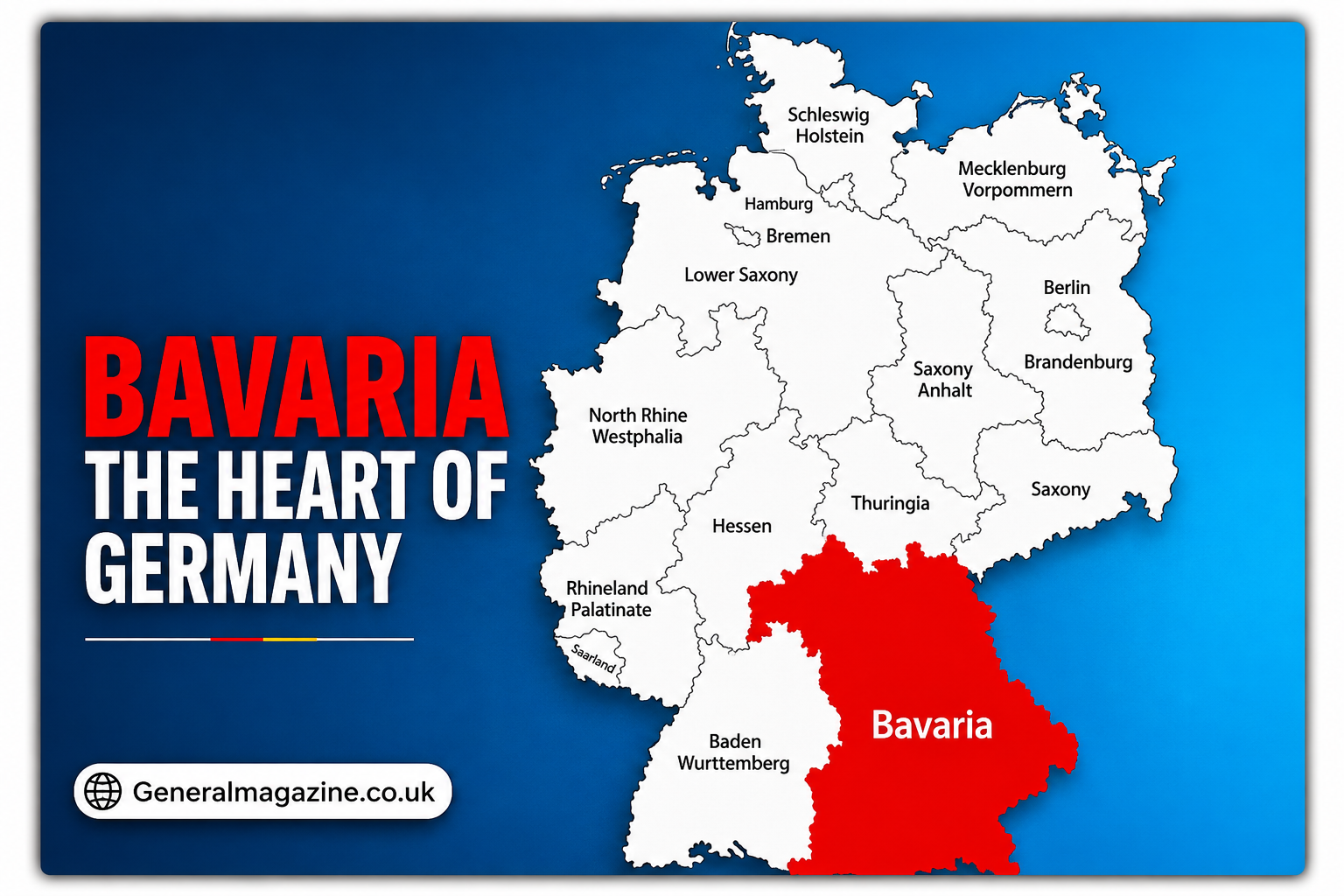
“Bavaria” refers to the southeastern German state long associated with fine porcelain production, home to renowned manufacturers producing tableware, figurines, and decorative china since the 18th century. “Western Germany,” by contrast, isn’t a region at all — it’s a political and export marker tied to a very specific slice of history. & more blogs to see digitally .
Why Manufacturers Added “Western Germany” to Their Marks
After the Second World War, Germany’s porcelain industry needed a way to signal to international buyers, especially in the United States, exactly which Germany a piece came from. West Germany came into existence in 1949, following four years of postwar occupation zones — American, Soviet, British, and French — that were replaced by the East/West division that year. Manufacturers based in the newly formed Federal Republic began stamping “Western Germany” or “West Germany” onto export pieces to distinguish their products from those made in the Soviet-controlled East.
The History Behind the Bavaria Western Germany Mark
From Occupation Zones to a Divided Germany
Immediately after the war, some porcelain was stamped simply with the occupying authority’s zone. Products made near the end of WWII sometimes carry a “US Zone Germany” mark, reflecting American administrative control over Bavaria at that time. As formal statehood took shape, factories shifted their stamps to reflect the new Federal Republic.
From the early 1950s onward, many Bavarian makers moved to a “Bavaria” mark paired with “Made in Western Germany,” replacing the earlier occupation-zone wording. That transition is one of the clearest dating signals collectors rely on today: a piece marked “US Zone Germany” points to roughly 1945–1949, while “Bavaria, Western Germany” points to the early 1950s or later.
How the Mark Evolved Over Time
The exact wording varied by factory and decade. Some marks read “Made in Western Germany,” others simply “Western Germany,” and later pieces often shortened this to “W. Germany” or dropped the qualifier entirely once the East/West distinction became less commercially necessary. One Bavarian maker, for example, used “Qualitäts-Porzellan” with “Made in Western Germany” between 1949 and 1956, then shifted to a stylized “Bavaria” mark without the western qualifier from 1956 to 1974. This kind of shift — dropping “Western” once reunification-era ambiguity faded — is typical across the industry, meaning the presence or absence of “Western” is itself a rough dating clue.
Which Manufacturers Used “Bavaria, Western Germany” Marks?
Dozens of Bavarian porcelain houses used some version of this mark. Notable examples include:
- Gerold Porzellan (Tettau, Bavaria): Used the “Gerold Porzellan” mark alongside “Bavaria” and “Made in Western Germany” from the early 1950s, following an earlier “US Zone Germany” mark used near the end of WWII.
- Alboth & Kaiser / Alka-Kunst (Kronach, Bavaria): Used multiple “Alka” and “Alboth & Kaiser” marks between the late 1940s and 1970s, many including a “Made in Western Germany” addition.
- Schwarzenhammer (Bavaria): Moved from a 1946–1949 mark reading “Germany” and “US Zone” to later colored versions adding “Made in Western Germany” and simply “Western Germany” from around 1960.
- Schwarzenbach (Bavaria): Used a “Bavaria, Western Germany” mark after 1955.
- Alka Kunst (Bavaria): Used an “Alka Kunst Made in Western Germany” mark specifically between 1955 and 1960.
Other well-known names collectors encounter include Mitterteich, Schumann, Edelstein, and Hutschenreuther — all Bavarian houses with export-era marks worth researching individually, since exact wording and dates differ factory by factory.
How to Date Porcelain Marked Bavaria Western Germany
Step-by-Step Dating Process
- Photograph the full mark clearly, including any colors, crowns, shields, or crests — these details narrow down the manufacturer.
- Check the wording precisely. “US Zone Germany” suggests 1945–1949; “Bavaria, Western Germany” or “Made in Western Germany” generally suggests early 1950s through the 1970s.
- Identify the manufacturer using the crest, monogram, or company name, then cross-reference known mark timelines for that specific factory — marks changed considerably even within one company’s history.
- Compare mark color and print style. Many factories used different ink colors (blue, green, black, gold) for different production periods.
- Look for a pattern or series name. Named decorations can sometimes be cross-referenced to catalogs for tighter date ranges.
- Cross-check with reunification-era wording. Marks dropping “Western” in favor of plain “Germany” or “W. Germany” from the late 1970s onward suggest a later production date.
Bavaria Germany vs Bavaria Western Germany vs Made in Germany — Comparison
| Mark Wording | Likely Period | What It Signals |
|---|---|---|
| “US Zone Germany” | 1945–1949 | Made under American postwar occupation control |
| “Bavaria, Western Germany” / “Made in Western Germany” | Early 1950s–1970s | Made in the Federal Republic (West Germany), for export |
| “Bavaria” (no country qualifier) | Varies widely, pre-war through modern | Requires manufacturer-specific research to date |
| “W. Germany” | Later 1970s–1990 | Later West German production, pre-reunification |
| “Germany” (post-1990) | After 1990 | Made after German reunification |
Is Bavaria Western Germany China Valuable?
Value depends far more on maker, pattern, condition, and rarity than on the “Western Germany” wording itself. A piece by a well-regarded factory in excellent condition, with a complete matching set, will typically outperform a single chipped piece from an unknown maker — even if both carry similar marks. That said, the mark still matters because it confirms authenticity and helps buyers verify the piece is genuinely mid-20th-century Bavarian porcelain rather than a later reproduction.
Pros and Cons of Collecting Bavaria Western Germany Porcelain
Pros
- Relatively accessible price point compared to antique 18th- and 19th-century porcelain
- Wide variety of patterns, makers, and styles from a well-documented production era
- The mark itself provides a built-in, fairly reliable dating tool
- Strong secondary market for complete tea sets and figurines from recognized factories
Cons
- Overlapping mark styles across different makers can make identification tricky
- Condition issues (crazing, chips, gilt wear) are common in pieces this age
- Not all “Bavaria Western Germany” pieces are equally collectible — value varies enormously by maker
- Reproduction or mismatched marks occasionally appear on resale platforms
Common Mistakes When Identifying These Marks
- Assuming “Bavaria” alone means postwar. Bavaria has produced porcelain since the 18th century; the region name by itself doesn’t date a piece.
- Treating every “Western Germany” mark as identical. Wording, color, and accompanying crests varied significantly by factory and even by decade within the same factory.
- Ignoring the manufacturer’s mark history. The same company often used several different marks across just a few decades — check the specific maker, not just the region.
- Overlooking condition when estimating value. A rare mark on a damaged piece is still a damaged piece.
Why This Matters
Understanding a Bavaria Western Germany mark isn’t just trivia for antique dealers — it’s the fastest way to verify authenticity, avoid overpaying for a reproduction, and accurately describe an item you’re selling or insuring. For collectors, it also connects a household object to a specific chapter of postwar European history: a divided Germany rebuilding its export economy one teacup at a time. Getting the identification right protects both buyers and sellers from costly guesswork.
Expert Recommendations
- Always photograph the mark in good lighting before searching online — subtle differences in font, crest shape, and color are often the only way to distinguish similar marks.
- Cross-reference multiple porcelain mark databases rather than relying on a single source, since factory histories are sometimes incomplete or inconsistently documented.
- When in doubt about value, consult a certified appraiser rather than pricing solely off online listings, which can vary wildly in accuracy.
- Keep sets together where possible — matched sets from a known Bavarian maker consistently command better prices than individual pieces.
Conclusion
A “Bavaria, Western Germany” stamp is more than a manufacturing footnote — it’s a small piece of Cold War-era history stamped onto everyday tableware, marking a specific window between West Germany’s founding in 1949 and the gradual fading of the East/West distinction over the following decades. Once you know how to read the wording, cross-check the manufacturer’s crest, and compare it against known mark timelines, dating your piece becomes a straightforward process rather than a guessing game.
FAQs
What does “Bavaria, Western Germany” mean on china?
It indicates the piece was made by a porcelain manufacturer in the Bavarian region of West Germany, typically produced for export between the early 1950s and the 1970s or 1980s.
Is Bavaria Western Germany china old?
It’s generally mid-20th century rather than antique. Pieces marked this way were most commonly produced between the 1950s and 1980s, after West Germany was established in 1949.
Is “Bavaria Western Germany” different from “Bavaria Germany”?
Yes. “Western Germany” specifically points to the postwar Federal Republic period, while a plain “Bavaria” or “Bavaria Germany” mark could span a much wider range of dates, including earlier and later production.
How can I tell which company made my Bavaria Western Germany piece?
Look closely at any crest, crown, monogram, or company name accompanying the mark, then compare it against known manufacturer mark timelines, since many Bavarian factories used similar wording.
Does a Bavaria Western Germany mark mean the piece is valuable?
Not on its own. The mark confirms origin and approximate age, but actual value depends on the specific maker, pattern rarity, set completeness, and condition.
In Short
- “Bavaria, Western Germany” marks confirm a piece was made in the Bavarian region of the postwar Federal Republic, generally from the early 1950s onward.
- The wording evolved over time — from “US Zone Germany” right after the war, to “Bavaria, Western Germany,” to later “W. Germany” marks as the political distinction became less necessary.
- Numerous Bavarian factories, including Gerold Porzellan, Alboth & Kaiser, and Schwarzenhammer, used variations of this mark across different decades.
- Value depends on maker, condition, and rarity — not on the presence of “Western Germany” alone.