











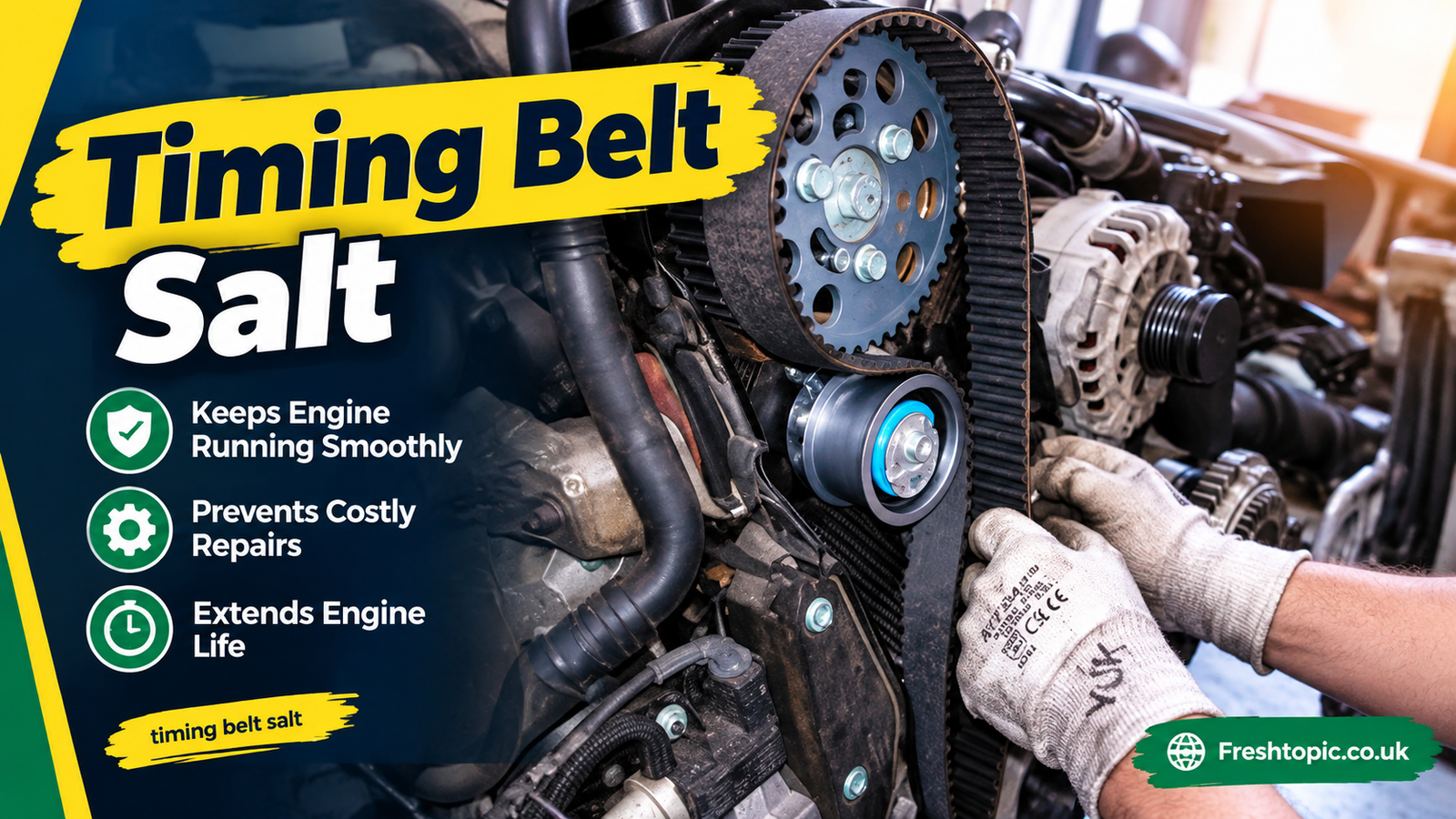
Your engine runs fine — until one day it doesn’t, and the repair bill is suddenly in the thousands. Here’s the problem: most drivers have no idea their timing belt even exists until it’s already failed, and by then, the damage is often done.
Here’s the curiosity hook: a single rubber belt, often smaller than a bicycle chain, is responsible for keeping your entire engine from destroying itself. If it snaps at the wrong time, in the wrong engine, it can bend valves, crack pistons, and turn a $600 repair into a $3,000 engine rebuild.
The pain point is real: confusing terminology — timing belt’s, timing belt tensioner, serpentine belt — leaves most car owners unsure what actually needs replacing, when, and why mechanics quote wildly different prices.
This guide fixes that. You’ll learn exactly what timing belt’s does, how to spot a failing timing belt tensioner, what a proper timing belt’s replacement involves, and the real difference in a serpentine belt’s vs timing belt‘s comparison — so you can make informed decisions instead of guessing.
What Is a Timing Belt and What Does It Do?
Timing belt’s is a reinforced rubber belt with teeth that synchronizes the rotation of your engine’s crankshaft and camshaft(s). This synchronization ensures your engine’s valves open and close at exactly the right moment relative to the movement of the pistons.
If that timing is off — even by a fraction of a second — your engine can run poorly, lose power, or in worst-case scenarios, suffer serious internal damage.
Timing belt’s is a toothed rubber belt that keeps an engine’s crankshaft and camshaft rotating in sync, ensuring valves and pistons move without colliding. & more blogs digital .
Timing Belt vs. Timing Chain
Not all engines use timing belt’s — some use a timing chain instead. The difference matters:
- Timing belts are made of reinforced rubber, run quietly, but wear out over time and require scheduled replacement.
- Timing chains are made of metal, last much longer (often the life of the engine), but run slightly louder and can still stretch or fail over very high mileage.
Serpentine Belt vs. Timing Belt: What’s the Real Difference?
This is one of the most searched points of confusion — and for good reason, since both are rubber belts inside the engine bay.
The serpentine belt is an external belt, visible when you open the hood, that powers accessories like the alternator, power steering pump, and air conditioning compressor. The timing belt‘s, by contrast, is hidden inside the engine, behind a protective cover, and controls internal valve timing.
Comparison Table
| Feature | Timing Belt | Serpentine Belt |
|---|---|---|
| Location | Internal (behind engine cover) | External (visible on engine) |
| Function | Syncs crankshaft & camshaft timing | Powers alternator, A/C, power steering |
| Visibility | Hidden, requires disassembly to inspect | Easily visible and inspectable |
| Failure risk | Can cause severe internal engine damage | Usually causes accessory failure, not engine damage |
| Typical replacement interval | 60,000–100,000 miles | 60,000–100,000 miles (varies) |
| Replacement cost | Higher (labor-intensive) | Lower (easier access) |
Bottom line: A serpentine belt failure is inconvenient — you might lose power steering or battery charging. A timing belt’s failure, especially on an “interference engine,” can be catastrophic for the engine itself.
Signs of a Failing Timing Belt or Tensioner
What Is a Timing Belt’s Tensioner?
The timing belt’s tensioner is a spring-loaded or hydraulic component that keeps constant, correct pressure on the timing belt as it runs. If the tensioner weakens or fails, the belt can slip, jump timing, or snap entirely — even if the belt itself is otherwise in decent condition.
Warning Signs and Symptoms
Watch for these red flags:
- A ticking or rattling noise from the front of the engine, especially at idle.
- Engine misfires or rough running caused by timing slightly off.
- Visible cracking, fraying, or glazing on the belt (if inspected).
- Check Engine Light related to camshaft/crankshaft position codes.
- Engine won’t start — a classic sign of a snapped timing belt.
Expert tip: A failing tensioner often causes a rattling noise before the belt actually fails — catching this early can save you from a full engine rebuild.
Timing Belt Replacement: What to Expect
Step-by-Step Replacement Process
- Diagnosis — the mechanic confirms mileage, symptoms, and inspects belt condition.
- Disassembly — removing covers, accessory belts, and sometimes engine mounts to access the timing belt’s.
- Belt and component removal — old belt, tensioner, and often the idler pulleys are removed.
- Installation of new parts — most shops recommend replacing the belt, tensioner, and idler pulleys together as a kit.
- Timing alignment — camshaft and crankshaft marks are precisely aligned before the new belt is installed (critical step).
- Reassembly and testing — covers and accessories are reinstalled, then the engine is started and checked for proper operation.
How Much Does Timing Belt Replacement Cost?
Costs vary significantly by vehicle, but general U.S. ranges are:
- Parts: $100–$400 (belt, tensioner, idler pulleys)
- Labor: $300–$800+ (highly labor-intensive due to disassembly required)
- Total average: $500–$1,200, depending on make/model and whether the water pump is replaced at the same time (often recommended, since it’s usually in the same location).
Data point: Many manufacturers recommend timing belt replacement between 60,000 and 100,000 miles — check your owner’s manual, since intervals vary widely by manufacturer and engine design.
Pros and Cons of Timing Belts (vs. Chains)
Pros of Timing Belts:
- Quieter operation than metal timing chains.
- Lighter weight, which can slightly improve fuel efficiency.
- Generally less expensive to manufacture, keeping vehicle costs down.
Cons of Timing Belts:
- Requires scheduled replacement — it’s a wear item, not a “lifetime” part.
- Failure risk increases significantly past the recommended replacement interval.
- On “interference engines,” a snapped belt can cause expensive internal engine damage.
Common Mistakes People Make With Timing Belt Maintenance
- Ignoring the manufacturer’s replacement interval — assuming “it still sounds fine” means it’s safe.
- Replacing only the belt, not the tensioner and pulleys — this often leads to a repeat failure and second labor bill.
- Not replacing the water pump at the same time when it’s driven by the timing belt’s — skipping this means paying for the same labor twice later.
- Confusing timing belt symptoms with serpentine belt symptoms — leading to delayed or incorrect diagnosis.
Why This Matters
Timing belt’s might be a small, hidden component, but it’s directly responsible for whether your engine runs — or gets destroyed. Understanding replacement intervals, tensioner symptoms, and the real difference between a serpentine belt and timing belt’s helps you avoid two costly mistakes: paying for unnecessary repairs, or ignoring a warning sign until it becomes a full engine failure.
Expert Recommendations
- For every driver: Check your owner’s manual for the exact timing belt’s replacement interval for your specific make and model — don’t rely on generic mileage numbers alone.
- For anyone hearing engine noises: Don’t wait — a rattling tensioner is often diagnosed quickly and cheaply compared to the cost of a snapped belt.
- For anyone scheduling replacement: Ask your mechanic to replace the tensioner, idler pulleys, and water pump (if applicable) in the same service — it saves on repeated labor costs down the road.
Conclusion
The timing belt’s may be hidden deep inside your engine, but its job is anything but small — it’s the difference between smooth, reliable performance and a potentially devastating repair bill. By understanding the real distinction between a serpentine belt and timing belt’s, recognizing tensioner warning signs early, and following proper replacement intervals, you put yourself in control instead of leaving it to chance.
FAQs
What does timing belt’s actually do?
It synchronizes the rotation of the crankshaft and camshaft so the engine’s valves and pistons move in the correct sequence without colliding.
How do I know if my timing belt tensioner is failing?
Common signs include a rattling or ticking noise from the front of the engine, rough idling, or a check engine light related to camshaft/crankshaft timing codes.
What’s the difference between a serpentine belt and a timing belt?
A serpentine belt is external and powers accessories like the alternator and A/C compressor, while timing belt’s is internal and controls engine valve timing.
How often should a timing belt be replaced?
Most manufacturers recommend replacement between 60,000 and 100,000 miles, but the exact interval depends on your specific vehicle — check your owner’s manual.
What happens if a timing belt breaks while driving?
On many engines, this can cause the engine to suddenly stop running, and on “interference engines,” it can cause valves and pistons to collide, resulting in serious internal damage.
Is timing belt replacement expensive?
Yes, relative to many other maintenance items — typically $500–$1,200 in the U.S., due to the labor-intensive disassembly required to access the belt.
In Short
- A timing belt keeps the crankshaft and camshaft perfectly synchronized inside the engine.
- A serpentine belt is a completely different, external belt that powers accessories, not internal timing.
- A failing timing belt tensioner often causes noise before a full failure — catching it early can prevent major damage.
- Timing belt replacement typically costs $500–$1,200 and should include the tensioner and idler pulleys.
- Following your manufacturer’s replacement interval is the single best way to avoid catastrophic engine damage.