











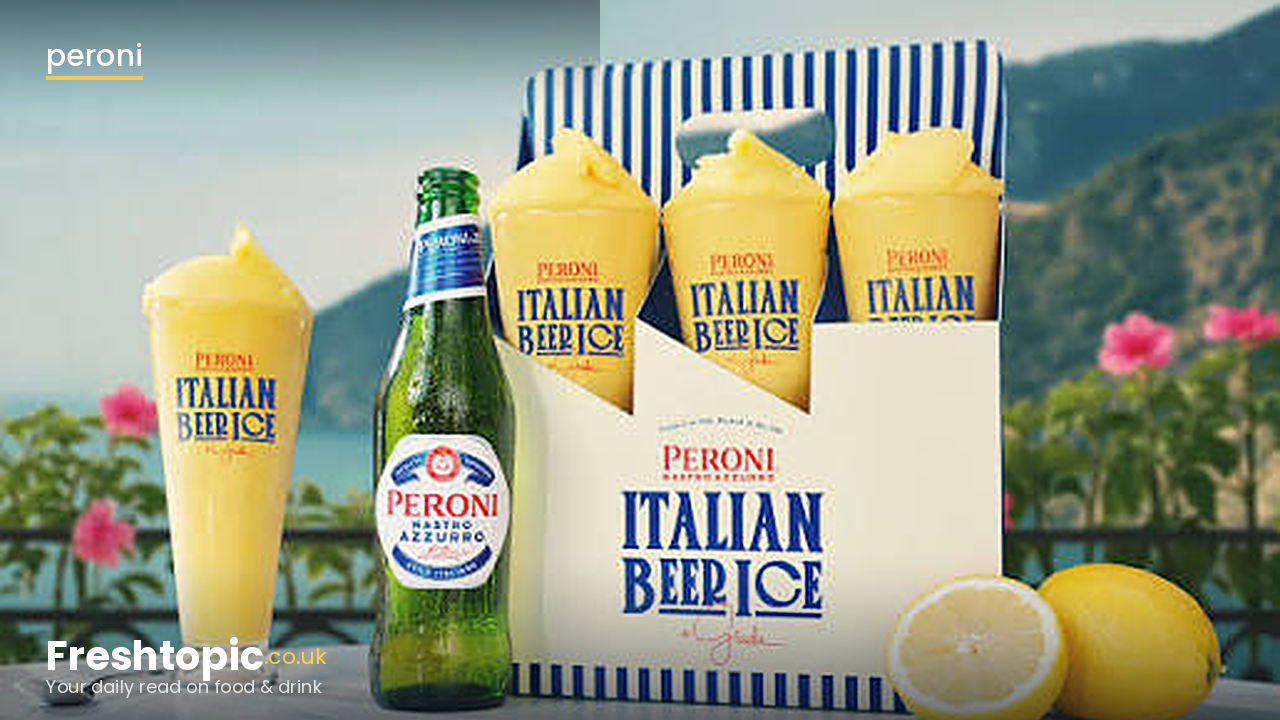
(Suggested featured image placement: hero shot of a chilled Peroni Nastro Azzurro bottle with condensation, alt text: “Peroni’s beer bottle with blue ribbon label served cold”)
Ever stood in the beer aisle staring at that blue-and-white striped label, wondering if Peroni’s beer is actually worth the price tag — or how it stacks up against the Heineken or Stella you usually grab? You’re not alone. Peroni’s is one of the most recognized import beers in the U.S. and UK, yet most drinkers can’t tell you its ABV, what makes it “Italian-style,” or why it tastes noticeably different from other European lagers.
That knowledge gap matters more than it seems. Ordering the wrong beer for a summer barbecue, a pizza night, or a gift basket can quietly ruin the moment. The good news: by the end of this guide, you’ll know Peroni’s exact ABV, its real flavor profile, its surprisingly complex ownership history, and exactly when (and when not) to reach for it.
What Is Peroni Beer?
Peroni’s is an Italian pale lager brand best known worldwide through its flagship product, Peroni Nastro Azzurro (“Blue Ribbon” in Italian). It’s brewed by Birra Peroni, one of Italy’s oldest and largest breweries, and it holds the position of Italy’s best-selling premium beer both domestically and in export markets.
Peroni’s is classified as an International Pale Lager — a crisp, light-bodied beer style built for easy drinking rather than bold hop bitterness. It’s typically served ice-cold in a tall, narrow glass and is closely associated with Italian food culture, especially pizza, seafood, and antipasti. & more blogs neural .
A Quick Snapshot
| Attribute | Detail |
|---|---|
| Brand | Peroni (flagship: Nastro Azzurro) |
| Founded | 1846, Vigevano, Italy |
| Beer style | International Pale Lager |
| Peroni ABV | 5.0–5.1% (varies slightly by market) |
| Current owner | Asahi Group Holdings (since 2016) |
| Best served | 38–43°F (3–6°C), tall pilsner glass |
Peroni ABV: How Strong Is Peroni Beer?
This is the single most-searched question about the brand, so let’s answer it directly.
Peroni’s Nastro Azzurro has an ABV of approximately 5.1% in most international markets, though U.S. labeling sometimes lists it at 5.0% due to regional rounding and labeling standards. That places it squarely in line with other mainstream European lagers — noticeably stronger than a light American lager, but far from a “strong beer” by craft standards.
Peroni Beer ABV by Variety
Peroni’s isn’t a single beer — it’s a family of related lagers, and ABV varies by product:
| Peroni Variety | ABV | Style Notes |
|---|---|---|
| Peroni Nastro Azzurro | 5.0–5.1% | The flagship, crisp pale lager |
| Peroni Nastro Azzurro 0.0 | 0.0% | Non-alcoholic version |
| Peroni Leggera | 3.5% | Lower-calorie, session-style lager |
| Peroncino | 5.0% | Smaller-format bottle of the classic recipe |
| Peroni Gran Riserva | 6.6% | Fuller-bodied, stronger seasonal release |
| Crystall | 5.6% | Slightly stronger, crisper pale lager |
How Peroni’s ABV Compares to Other Popular Beers
- Peroni (5.0–5.1%) vs. Heineken (5.0%) — nearly identical strength
- Peroni vs. Stella Artois (5.2%) — Stella is marginally stronger
- Peroni vs. Corona (4.6%) — Peroni is noticeably stronger
- Peroni vs. Budweiser (5.0%) — essentially the same ABV
Peroni’s beer has an ABV of 5.0% to 5.1%, making it comparable in strength to Heineken and Budweiser, and slightly stronger than Corona.
The History of Peroni: From Vigevano to Global Icon
1846–1963: The Family Brewery Years
Peroni’s story begins in 1846, when Francesco Peroni founded a small brewery in Vigevano, in Italy’s Lombardy region. His son, Giovanni Peroni’s, later expanded operations to Rome in 1864 — six years before Rome even became Italy’s capital. Over the following century, the family-run brewery grew into one of Italy’s most prominent beer producers.
The brand’s most famous product, Nastro Azzurro, wasn’t introduced until 1963 — a decade that also gave rise to several other iconic “Made in Italy” brands. Its name and blue-striped label were designed to evoke a nautical “blue ribbon” of quality, projecting Italian style and modernity at a time when the country’s design and fashion industries were exploding onto the global stage.
2003–2016: SABMiller, AB InBev, and the Sale to Asahi
Peroni’s ownership has shifted several times over the past two decades:
- 2003: South African Breweries (SAB) acquired Peroni.
- SAB merges with Miller to form SABMiller, bringing Peroni into a global brewing portfolio.
- 2016: When Anheuser-Busch InBev acquired SABMiller, regulators required AB InBev to divest several brands — including Peroni, Grolsch, and Meantime — to avoid market dominance concerns.
- October 2016: Japan’s Asahi Group Holdings acquired these brands for roughly €2.55 billion, bringing Peroni under Asahi’s ownership, where it remains today.
Despite the ownership changes, Peroni’s is still brewed in Italy — with production plants in Rome, Bari, and Padua — preserving its “authentically Italian” positioning even as a subsidiary of a Japanese multinational.
What Does Peroni Taste Like?
Peroni’s Nastro Azzurro is designed to be light, crisp, and refreshing rather than complex or bitter. It leans into drinkability, which is part of why it pairs so well with food.
Tasting Notes
- Appearance: Pale straw-gold color, clear, with a quickly dissipating white head
- Aroma: Mild malty sweetness with faint citrus and grassy hop notes
- Taste: Light bready malt sweetness, subtle bitterness, clean finish
- Body: Light-to-medium, highly carbonated
- Finish: Fast, crisp, and dry — built for repeat sips rather than sipping slowly
Compared to German or Czech pilsners, Peroni is less hop-forward and less bitter, which makes it more approachable for casual drinkers and a natural match for Italian cuisine.
Peroni Beer Varieties Explained
- Nastro Azzurro – the flagship pale lager most people mean when they say “Peroni”
- Nastro Azzurro 0.0 – an alcohol-free version with a similar flavor profile
- Peroni Leggera – a lighter, lower-ABV, lower-calorie option for casual drinking
- Peroni Gran Riserva – a stronger, more full-bodied seasonal offering
- Crystall – a slightly stronger, crisper variant popular in Italy
Peroni vs. Other Italian Beers (Comparison Table)
| Beer | Style | ABV | Best For |
|---|---|---|---|
| Peroni Nastro Azzurro | International Pale Lager | 5.0–5.1% | Everyday drinking, pizza nights |
| Moretti (Birra Moretti) | Pale Lager | 4.6% | Slightly maltier, food-friendly |
| Ichnusa | Pale Lager | 4.7% | Sardinian regional favorite |
| Menabrea | Pale Lager | 4.8% | Slightly more traditional, mountain-brewed style |
Pros and Cons of Peroni Beer
Pros:
- Widely available in the U.S., UK, and Europe
- Balanced ABV — flavorful without being heavy
- Pairs exceptionally well with pizza, pasta, and seafood
- Multiple ABV/style options within the same brand family
- Recognizable, premium-feeling branding for gifting or entertaining
Cons:
- Can taste generic or “watery” to craft beer enthusiasts
- Not brewed for complexity — limited flavor depth compared to specialty lagers
- Pricing sits at a premium compared to domestic mainstream lagers
- Some consumers may be surprised it’s owned by a Japanese conglomerate, not an independent Italian brewer
Common Mistakes to Avoid When Buying or Serving Peroni
- Serving it too warm. Peroni is built to be served ice-cold (38–43°F). At warmer temperatures, its subtle flavors flatten out quickly.
- Confusing Peroni Nastro Azzurro with Peroni Leggera or 0.0. They have different ABVs and calorie counts — check the label before buying a case.
- Expecting a hop-forward craft beer experience. Peroni is a session lager, not an IPA. Judging it by craft-beer standards sets the wrong expectation.
- Pairing it with heavy, rich dishes. Peroni shines with lighter Italian fare — it can get lost next to very rich or smoky food.
- Assuming all Peroni products have the same ABV. As shown above, ABV ranges from 0.0% to 6.6% depending on the variety.
How to Serve Peroni Beer Like an Italian
- Chill the bottle or can to at least 40°F before opening.
- Pour into a tall, narrow pilsner-style glass at a slight angle to build a thin, clean head.
- Serve alongside classic pairings: margherita pizza, fried seafood, bruschetta, or a simple antipasto board.
- Drink promptly — Peroni’s appeal is its crispness, which fades as it warms.
Why This Matters
Understanding Peroni’s ABV, taste, and history isn’t just trivia — it directly affects your buying decisions, your dinner pairings, and your expectations at the bar. Knowing that Peroni’s sits at roughly 5.1% ABV means you can plan responsible consumption more accurately. Knowing its flavor profile helps you avoid disappointment if you’re expecting a hop-heavy craft beer. And understanding its ownership and brewing history helps you make an informed choice if authenticity and brand story matter to your purchase.
For restaurants, bars, and retailers, this knowledge also matters commercially: Peroni’s broad recognition and consistent ABV make it a low-risk, high-demand addition to beer menus targeting both casual drinkers and customers seeking an “import” experience.
Expert Recommendations
- If you’re new to Peroni’s: Start with the classic Nastro Azzurro at 5.0–5.1% ABV — it’s the most balanced entry point into the lineup.
- If you’re watching calories or alcohol intake: Try Peroni’s Leggera (3.5% ABV) or Nastro Azzurro 0.0 for a lighter option without sacrificing the brand’s flavor identity.
- If you want something bolder: Peroni’s Gran Riserva at 6.6% ABV offers more body and strength for those who find the standard lager too light.
- For pairing: Match Peroni with lighter Italian dishes — margherita pizza, calamari, or a simple caprese salad — rather than heavy red-sauce or smoked dishes.
- For serving: Always serve well-chilled in a clean glass; Peroni’s appeal depends heavily on temperature and freshness.
FAQs
What is Peroni beer made of?
Peroni’s is made using traditional lager ingredients — water, barley malt, corn (“mais nostrano”), hops, and yeast — following a pale lager brewing process that emphasizes a light body and clean finish.
What is the ABV of Peroni beer?
Peroni’s Nastro Azzurro has an ABV of approximately 5.0% to 5.1%, depending on the market. Other varieties, like Peroni’s Leggera (3.5%) and Peroni Gran Riserva (6.6%), have different strengths.
Is Peroni a strong beer?
No, Peroni’s is a moderate-strength beer. At roughly 5.1% ABV, it’s comparable to Heineken and Budweiser — stronger than light beers like Corona, but far from a high-ABV craft or specialty beer.
Who owns Peroni beer?
Peroni’s is currently owned by Asahi Group Holdings, a Japanese brewing company, which acquired the brand in October 2016 after regulators required AB InBev to divest it following the SABMiller acquisition.
Where is Peroni beer brewed?
Peroni’s is still brewed in Italy, primarily at production facilities in Rome, Bari, and Padua, despite its international ownership.
What does Peroni beer taste like?
Peroni’s tastes light, crisp, and slightly malty, with mild citrus and grassy hop notes and a clean, fast finish. It’s designed for easy drinking rather than bold bitterness.
Is Peroni beer gluten-free?
No, standard Peroni’s beers are brewed from barley malt and are not gluten-free.
What’s the difference between Peroni and Peroni Nastro Azzurro?
“Peroni’s” is the parent brand, while “Nastro Azzurro” is its flagship pale lager. They’re sometimes used interchangeably, but Nastro Azzurro is technically one specific product within the broader Peroni lineup.
What foods pair well with Peroni?
Peroni’s pairs well with pizza, seafood, bruschetta, and other light Italian dishes that won’t overpower its crisp, mild flavor profile.
In Short
- Peroni’s flagship beer, Nastro Azzurro, has an ABV of roughly 5.0–5.1%, similar to Heineken and Budweiser.
- Peroni’s was founded in 1846 in Vigevano, Italy, and is now owned by Japan’s Asahi Group Holdings.
- The brand offers multiple varieties with ABVs ranging from 0.0% (non-alcoholic) to 6.6% (Gran Riserva).
- Peroni’s is best served ice-cold and pairs best with light Italian dishes like pizza and seafood.
- It’s a crisp, easy-drinking lager — not a hop-forward or high-complexity craft beer.