









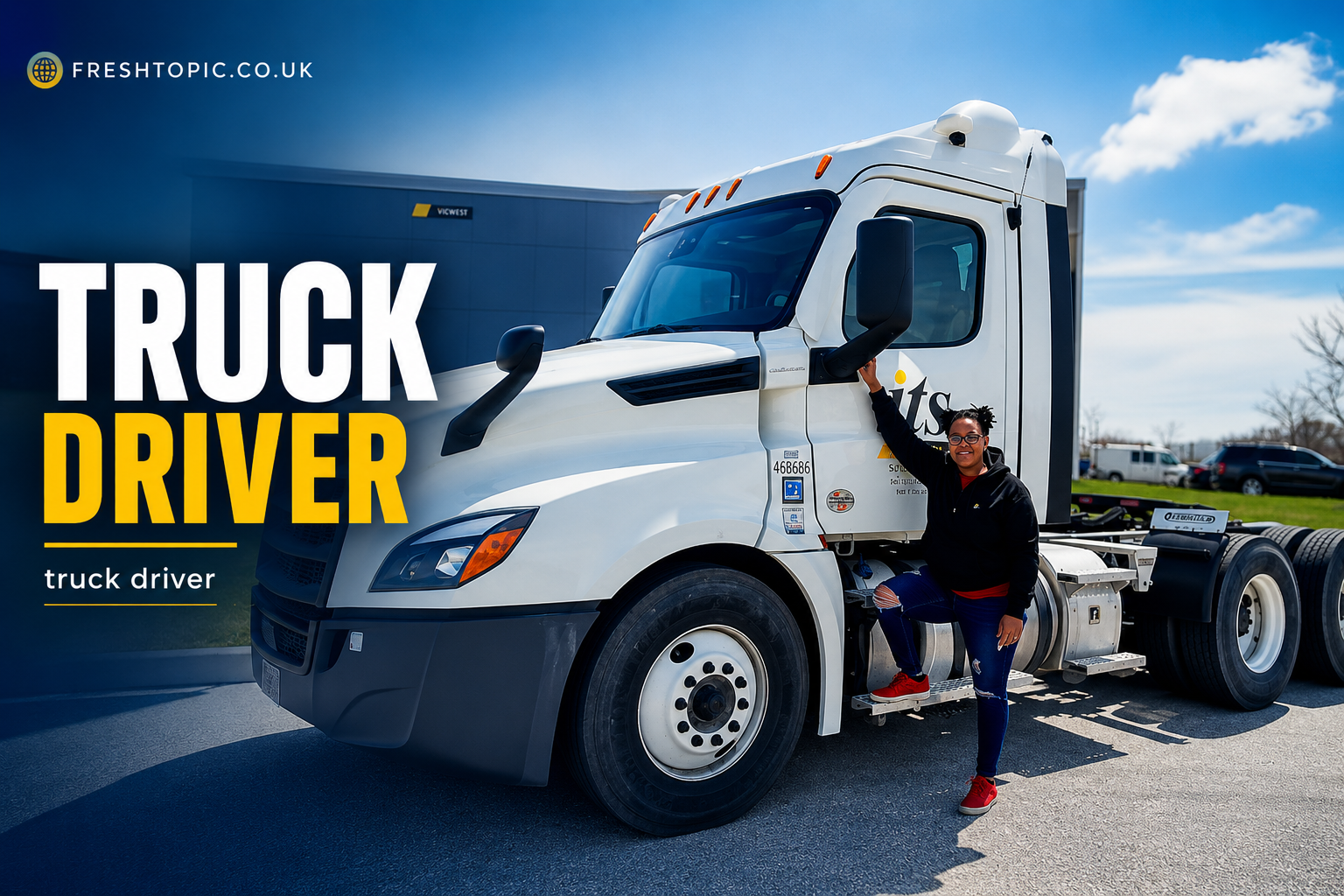
You’ve probably seen the headlines: trucking companies desperate for drivers, six-figure sign-on bonuses, and a national shortage that never seems to end. But when you start digging for real numbers, the picture gets confusing fast. One site says truck drivers make $45,000. Another says $90,000. A Walmart job posting promises “up to six figures,” while a local garbage route pays hourly.
So what’s the truth?
Here’s the short version: truck driver salary in the U.S. sits at a median of $58,640 a year according to the latest federal wage data — but where you drive, what you haul, and who signs your paycheck can swing that number by tens of thousands of dollars. A Walmart truck driver can out-earn most of the industry. A garbage truck driver salary often beats a long-haul rookie’s pay without ever leaving town. And dump truck driver jobs can range from a seasonal $23-an-hour gig to a six-figure specialty haul
This guide breaks down exactly what each of these driving careers pays in 2026, why the gaps exist, and how to position yourself for the higher end of the range.
Truck Driver Salary — The National Picture
What the Data Actually Shows
According to the U.S. Bureau of Labor Statistics’ Occupational Employment and Wage Statistics (OEWS) survey, heavy and tractor-trailer truck drivers earned a national median salary of $58,640 per year as of the most recent release, or roughly $28 per hour. Over 2 million people work in this role in the U.S. alone. & more blogs neural .
But the median hides a wide spread:
- Bottom 10%: under $40,140/year
- 25th percentile: around $47,960/year
- 75th percentile: around $69,120/year
- Top 10%: over $79,380/year
Job board data (which reflects live postings rather than a full workforce survey) tends to skew higher, often placing average weekly pay near $1,650–$1,700, or roughly $86,000–$88,000 annualized — a reminder that posted job pay and the full occupational average aren’t the same thing. Employers advertising open roles tend to offer more competitive rates than the market-wide average.
Why Truck Driver Pay Varies So Much
Five factors explain almost all of the spread:
- Freight type. Hazmat, tanker, and oversized loads pay more than dry van.
- Route type. Local routes pay less per mile but let you sleep at home; over-the-road (OTR) and regional routes pay more but demand time away.
- Experience and endorsements. A CDL-A with tanker or doubles/triples endorsements commands a premium.
- Employer type. Large retail and grocery fleets (like Walmart) often out-pay small carriers because they compete on retention, not just recruitment.
- Geography. States with driver shortages or high cost of living — North Dakota, Wyoming, and parts of the Midwest — often post above-average wages.
Bar chart of truck driver salary percentiles —”Truck driver salary distribution chart showing 10th to 90th percentile pay in the US”]
Walmart Truck Driver Salary and Job Details
How Walmart Pays Its Drivers
Walmart has spent years marketing itself as one of the best-paying employers in trucking, and the numbers generally back that up. The company has historically paid its private fleet drivers on a per-mile-plus-bonus structure — roughly the high-80-cents-per-mile range, plus stop and arrival bonuses — with average total pay that has approached the high $80,000s to low $90,000s annually for experienced drivers. Walmart has publicly stated its goal is for company drivers to be able to earn six figures.
That puts a Walmart truck driver salary well above the national median for the occupation, which is one reason Walmart’s driver openings routinely draw thousands of applicants.
Beyond base pay, Walmart drivers are typically home more often than long-haul OTR drivers at smaller carriers, since Walmart’s private fleet primarily runs store-to-distribution-center routes rather than coast-to-coast hauls. That combination — competitive pay plus more predictable time at home — is a major differentiator in an industry known for driver burnout.
What It Takes to Qualify
Walmart’s driver program has historically required:
- A valid CDL-A license
- Roughly 30 months of verifiable tractor-trailer experience within the past 3 years
- A clean driving and safety record
- Successful completion of a mentorship/training period with a certified driver-trainer
This isn’t an entry-level role. Walmart is generally hiring experienced drivers, not people fresh out of CDL school — which is part of why the pay sits above the industry median.
“See our full CDL license guide for new drivers”
Garbage Truck Driver Salary Breakdown
Average Pay by Experience Level
A garbage truck driver salary is one of the more overlooked corners of the driving world, but it’s competitive — especially considering most routes are local, meaning no overnights away from home.
| Experience Level | Estimated Annual Pay |
|---|---|
| Entry-level | $40,000 – $50,000 |
| Mid-level (3–5 years) | $50,000 – $65,000 |
| Senior / specialized routes (5+ years) | $65,000 – $85,000+ |
Industry-wide, garbage truck drivers average roughly $52,000–$73,000 a year, with a median near $61,000, and typical hourly rates in the $22–$24 range before overtime. A CDL is required in nearly every jurisdiction, and drivers who also handle commercial or hazardous-route pickups tend to sit at the top of that range.
Union vs. Non-Union Routes
This is the single biggest lever on garbage truck driver pay. Municipal and unionized private-hauler routes (common in large metro areas) tend to pay meaningfully more than non-union residential routes, and they usually come with stronger benefits, seniority-based raises, and pension contributions. Drivers weighing offers should always ask directly whether a route is union-represented — it can be the difference between the low end and high end of the range for the exact same job title.
Garbage truck on a residential route —”Garbage truck driver operating a commercial waste collection vehicle on a city street”]
Dump Truck Driver Jobs and Pay
Hourly vs. Salaried Dump Truck Work
Dump truck driver jobs are usually paid hourly rather than salaried, and pay is closely tied to the season and the type of material hauled (aggregate, asphalt, demolition debris, sand).
Current job-market data shows dump truck drivers typically earning:
- $19–$25/hour for general construction hauling roles
- $23–$33/hour in higher cost-of-living regions or on specialized loads (asphalt, equipment towing)
- $40,000–$52,000/year for standard union dump truck positions
- Six-figure potential for owner-operators who own their rig and take on contract or specialty hauling work
Because much of this work is seasonal (paving and construction slow down in winter in colder climates), annualized pay can look lower than the hourly rate suggests unless the driver works year-round or supplements with snowplow or other seasonal contracts.
Owner-Operator Dump Truck Earnings
Owning your own dump truck changes the math entirely. Owner-operators bill by the load or by the hour at a much higher rate than a company driver’s wage — but they’re also covering fuel, insurance, maintenance, and truck payments out of that revenue. Experienced owner-operators in strong markets can clear well into six figures in gross revenue, though take-home pay after expenses is a different (and much more variable) number.
“How to become an owner-operator: startup costs and licensing”
Salary Comparison Table
| Driving Job | Typical Annual Pay | Typical Hourly Pay | Home Time | CDL Required |
|---|---|---|---|---|
| Truck driver (national average, all types) | $58,640 median | ~$28/hr | Varies | Yes |
| Walmart truck driver | $80,000–$100,000+ | Per-mile + bonuses | Frequent (mostly regional) | Yes, ~30 mo. experience |
| Garbage truck driver | $52,000–$73,000 | $22–$24/hr | Daily (local routes) | Yes |
| Dump truck driver | $40,000–$52,000+ (owner-operators higher) | $19–$33/hr | Daily (local/regional) | Yes |
Why This Matters
Trucking touches nearly every part of the U.S. economy — from the groceries on store shelves to the roads under your car. But behind the “driver shortage” headlines is a workforce making very different money depending on the lane they choose. Someone comparing a Walmart driving job to a dump truck gig isn’t just comparing paychecks — they’re comparing lifestyles: time away from home, physical demands, seasonal stability, and long-term career growth.
Understanding these differences matters for three groups specifically:
- Job seekers deciding which CDL path to pursue
- Current drivers evaluating whether to switch employers or specialties
- Families and career counselors advising someone considering trucking as a stable, non-degree career path
With trucking and driving occupations projected to keep growing through the decade, and thousands of annual openings nationwide, this is a career field where the pay data genuinely changes people’s decisions — not just industry trivia.
Pros and Cons of Each Driving Path
Walmart / large retail fleet driving
- ✅ Above-average pay, strong benefits, frequent home time
- ❌ Requires significant prior experience; competitive to get hired
Garbage truck driving
- ✅ Local routes, no overnight travel, steady demand regardless of economy
- ❌ Physically demanding, early start times, pay varies heavily by union status
Dump truck driving
- ✅ Fast entry into trucking, ownership potential, good hourly rates
- ❌ Seasonal income swings, higher physical/safety exposure, owner-operator costs eat into gross pay
Mistakes to Avoid When Chasing Higher Pay
- Comparing hourly rate without accounting for guaranteed hours. A $30/hour seasonal job may pay less annually than a $24/hour year-round one.
- Ignoring union status. Two nearly identical driving jobs can differ by $10,000+ a year based on union representation alone.
- Underestimating owner-operator overhead. Gross pay isn’t take-home pay — fuel, insurance, and maintenance can consume 40% or more of revenue.
- Chasing sign-on bonuses over base pay. A large bonus at a carrier with high turnover often signals a role that’s hard to retain drivers in.
- Not verifying experience requirements before applying. Roles like Walmart’s driving positions typically require years of clean-record experience — applying without it wastes time on both sides.
Expert Recommendations
- New to trucking? Consider starting with a regional or dedicated route (like grocery distribution or dump truck work) to build the experience needed for higher-paying private fleet jobs later.
- Already experienced? Look specifically at private fleets (retail, grocery, beverage distribution) — they consistently out-pay for-hire carriers for similar mileage.
- Considering garbage or dump truck work? Ask about union status and year-round guaranteed hours before comparing hourly rates across job offers.
- Weighing owner-operator status? Run the numbers on fuel, insurance, and financing before assuming gross revenue equals income — a written cost breakdown from an accountant familiar with trucking is worth the fee.
- Any path: A clean driving record is the single biggest lever on long-term earning potential across every category in this guide.
Conclusion
Trucking isn’t one career — it’s a whole spectrum of them, and the pay reflects that. A Walmart truck driver salary rewards experience and consistency with some of the best pay in the industry. A garbage truck driver salary offers steady, local, recession-resistant work. Dump truck driver jobs offer a faster entry point and real upside for those willing to eventually own their rig. And the broader truck driver salary data shows just how much route, freight type, and employer choice matter.
If you’re weighing a move into trucking — or already in the industry and wondering whether you’re being paid fairly — the numbers above are a solid starting benchmark. From here, the smartest next step is comparing actual local job postings in your specialty and region, since pay can shift significantly by state and metro area.
FAQs
How much does a Walmart truck driver make?
Walmart’s private fleet drivers have historically earned in the range of the high-$80,000s to low-$90,000s annually through a per-mile-plus-bonus pay structure, with the company stating a goal of six-figure earning potential for its drivers.
What is the average garbage truck driver salary?
Garbage truck drivers in the U.S. typically earn between $52,000 and $73,000 a year, with a median around $61,000, or roughly $22–$24 per hour before overtime.
How much do dump truck drivers make per hour?
Most dump truck driver jobs pay between $19 and $33 per hour depending on region, experience, and the type of material hauled, with union positions often landing between $40,000 and $52,000 annually.
What is the national average truck driver salary?
The median truck driver salary in the U.S. is $58,640 per year according to the latest federal wage data, with the middle 50% of drivers earning between roughly $48,000 and $69,000.
Do you need a CDL for garbage or dump truck driving?
Yes. Both garbage truck and dump truck driving jobs require a Commercial Driver’s License (CDL) in nearly every U.S. state, though the specific class required can vary by vehicle weight and job.
Which pays more: garbage truck driving or long-haul trucking?
It depends on the route. Entry-level long-haul pay is often comparable to or slightly below garbage truck driver pay, but experienced long-haul and private fleet drivers (like Walmart’s) typically out-earn most garbage truck routes at the higher end.
Is trucking a good career in 2026?
Federal projections show continued, if modest, growth in trucking employment, with thousands of annual job openings nationwide driven by retirements and turnover — making it a relatively accessible, non-degree career path with a wide pay range depending on specialty.
In Short
- The national median truck driver salary is $58,640/year, but actual pay ranges from under $40,000 to over $79,000 depending on experience and specialty.
- Walmart truck driver pay sits well above the industry median, often in the $80,000–$100,000+ range, but requires significant prior experience to qualify.
- Garbage truck driver salary averages $52,000–$73,000/year, with union status being the biggest single factor in where a driver lands in that range.
- Dump truck driver jobs pay hourly ($19–$33/hr typically), with seasonal swings and strong upside for owner-operators who take on the added business risk.
- CDL licensing, a clean driving record, and route type (local vs. regional vs. OTR) are the common threads driving pay differences across every category.