









You’ve probably held something made of mother of pearl’s without even realizing it — a vintage spoon in a grandmother’s drawer, a button on an old coat, or a shimmering pendant in a jewelry case. It catches your eye instantly, but figuring out whether it’s genuine, what it’s actually worth, or what it even means can feel surprisingly confusing.
Here’s the problem: mother of pearl’s is one of the most imitated materials in jewelry and home goods, and most buyers can’t tell the real thing from plastic or resin knockoffs. That uncertainty costs shoppers money and disappointment every year.
This guide breaks down everything you need to know — the meaning of mother of pearl’s, how a mother of pearl’s necklace is made and valued, why the mother of pearl’s spoon became a beloved heirloom piece, and exactly how to spot authentic material before you buy.
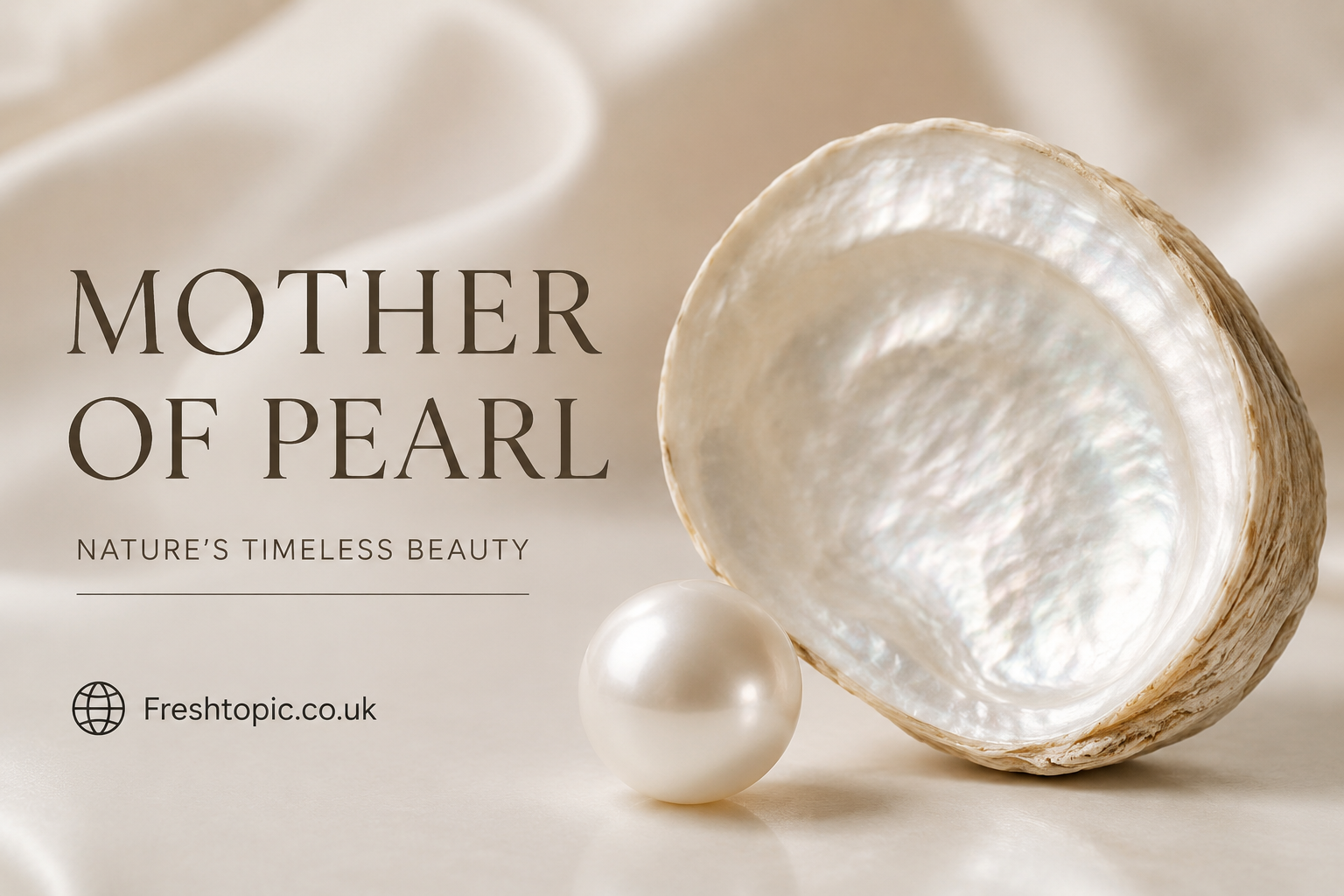
Show Image : mother of pearl shell showing natural iridescence
What Is Mother of Pearl?
Mother of pearl’s, also called nacre, is the iridescent inner layer of certain mollusk shells, including oysters, mussels, and abalone. It’s the same substance mollusks use to coat pearls and line their own shells for protection.
How Mother of Pearl Forms
Mollusks secrete nacre in microscopic layers made of calcium carbonate and a protein called conchiolin. As these layers build up over time, they refract light in a way that produces the signature rainbow shimmer — a phenomenon known as iridescence. This natural process can take several years, which is part of why quality mother of pearl’s carries real value. & more blogs neural .
Mother of Pearl vs. Pearl: What’s the Difference?
This is one of the most searched questions on the topic, so let’s answer it directly: a pearl is a solid, rounded gem formed when a mollusk coats an irritant in nacre, while mother of pearl’s is the nacre-lined shell itself. Pearls are typically more valuable per gram, but mother of pearl’s offers a larger, flatter surface that’s ideal for inlay work, buttons, and jewelry settings.
Mother of Pearl Meaning and Symbolism
Across cultures, mother of pearl’s has long been associated with purity, protection, and femininity — hence the name, referencing its role as the “mother” that produces pearls. In many traditions, it’s considered a calming stone linked to emotional balance and intuition.
Cultural and Historical Significance
Mother of pearl’s has been used for thousands of years, appearing in ancient Egyptian jewelry, Chinese lacquerware inlays, and Islamic architectural decoration. Victorian-era craftsmen prized it for cutlery and sewing accessories, which explains why so many antique mother of pearl’s spoons and buttons still circulate today.
Mother of Pearl Necklace: What to Look For
A mother of pearl’s necklace can range from a $20 costume piece to a several-hundred-dollar fine jewelry item, depending on the source shell, thickness, and craftsmanship.
Types of Mother of Pearl Used in Jewelry
- White/cream mother of pearl — from oyster shells, the most common and affordable
- Black mother of pearl — from the black-lipped oyster, prized for its deep, iridescent sheen
- Golden mother of pearl — rarer and more expensive, with a warm golden hue
- Abalone mother of pearl — known for intense blue-green iridescence
How to Spot Real vs. Fake Mother of Pearl
- Check the pattern. Genuine mother of pearl’s has irregular, organic growth lines. Plastic imitations often have uniform, repeating patterns.
- Look at the weight. Real mother of pearl’s feels denser and cooler to the touch than plastic or resin.
- Examine the edges. Authentic pieces show natural shell layering at the edges; fakes often look uniformly smooth or painted.
- Do a light test. Real nacre shifts color subtly as you tilt it in the light; imitations tend to look flat or have a printed rainbow effect.
Mother of Pearl Spoon: A Timeless Heirloom
The mother of pearl’s spoon was especially popular in the 19th and early 20th centuries, often used for caviar, salt, or dessert service because the material doesn’t react chemically with certain foods the way metal can.
Why Mother of Pearl Spoons Were Popular
Victorian and Edwardian households valued mother of pearl’s utensils as symbols of refinement. Because caviar can take on a metallic taste from silver or steel utensils, mother of pearl’s (along with materials like bone and horn) became the preferred choice among the upper class — a practice still followed by some caviar connoisseurs today.
Caring for Antique Mother of Pearl Spoons
- Hand wash only; never put mother of pearl in a dishwasher
- Avoid prolonged soaking, which can weaken the shell layers
- Dry immediately with a soft cloth to prevent water spotting
- Store away from direct sunlight to prevent discoloration over time
Show Image: antique mother of pearl’s spoon handle
Mother of Pearl Pros and Cons
| Aspect | Pros | Cons |
|---|---|---|
| Durability | Naturally hard, resists scratching | Can crack or chip if dropped |
| Appearance | Unique iridescent shimmer, no two pieces alike | Can fade or dull if not cared for properly |
| Value | Holds value well, especially antique pieces | Genuine pieces cost more than imitations |
| Maintenance | Long-lasting with proper care | Not dishwasher or chemical-safe |
| Ethical sourcing | Often a byproduct of the food industry | Some species face overharvesting concerns |
Why This Matters
Understanding the difference between authentic and imitation mother of pearl’s protects your wallet and helps you make informed purchases, whether you’re buying a family heirloom, a wedding gift, or an investment piece. It also matters from a sustainability standpoint — knowing which shell types are sourced responsibly helps buyers support ethical suppliers rather than contributing to overharvesting of vulnerable mollusk populations.
Common Mistakes to Avoid When Buying Mother of Pearl
- Assuming shine equals authenticity: Many high-quality plastics mimic iridescence convincingly.
- Ignoring the seller’s sourcing information: Reputable jewelers should disclose the shell type and origin.
- Storing pieces improperly: Heat and dry air can cause natural nacre to crack over time.
- Overpaying for “mother of pearl” that’s actually shell composite: Crushed shell mixed with resin is common in budget jewelry and should be priced accordingly.
- Cleaning with harsh chemicals: Ammonia-based cleaners can damage the nacre’s surface.
Expert Recommendations
- Buy from jewelers who provide certification or clear sourcing details, especially for higher-value black or golden mother of pearl’s pieces.
- For everyday jewelry, white mother of pearl offers the best balance of affordability and durability.
- If purchasing an antique mother of pearl spoon, inspect the handle under bright light for hairline cracks before buying.
- Rotate storage of mother of pearl’s jewelry to avoid prolonged pressure on any single point, which can cause micro-fractures over time.
Conclusion
Mother of pearl’s isn’t just a pretty shimmer — it’s a naturally formed material with centuries of cultural significance, real craftsmanship value, and a few buying pitfalls worth knowing before you spend your money. Whether you’re eyeing a mother of pearl’s necklace, inheriting a vintage spoon, or simply curious about the meaning behind the name, you now know how to identify quality, care for it properly, and avoid common imitation traps.
Next time you spot a shimmering pendant or an antique spoon at a flea market, you’ll know exactly what to look for.
FAQs
What does mother of pearl mean?
Mother of pearl’s refers to nacre, the iridescent substance mollusks produce to line their shells and coat pearls. The name reflects its role in “producing” pearls.
Is mother of pearl real or fake pearl?
Mother of pearl’s is a real, naturally occurring material — it’s not a fake pearl, but a different substance from the same mollusks that produce pearls.
How can you tell if a mother of pearl necklace is real?
Check for irregular growth patterns, a cool and dense feel, natural shell layering at the edges, and subtle color shifts when tilted in light.
Why were spoons made of mother of pearl?
Mother of pearl’s spoons were popular because the material doesn’t affect the taste of delicate foods like caviar, unlike metal utensils.
Is mother of pearl expensive?
Prices vary widely — white mother of pearl’s is affordable, while black and golden varieties can be significantly more expensive due to rarity.
Can mother of pearl’s get wet?
Yes, but it shouldn’t be soaked for long periods or exposed to harsh chemicals, as this can weaken the shell’s layered structure over time.
In Short
- Mother of pearl is nacre, the iridescent lining of certain mollusk shells — distinct from pearls themselves.
- It symbolizes purity, protection, and femininity across various cultures.
- Genuine mother of pearl can be identified by irregular patterns, weight, and natural light-shifting iridescence.
- Mother of pearl spoons were historically favored for serving caviar and delicate foods.
- Proper care (hand washing, avoiding chemicals, controlled storage) preserves both value and appearance.